NEW 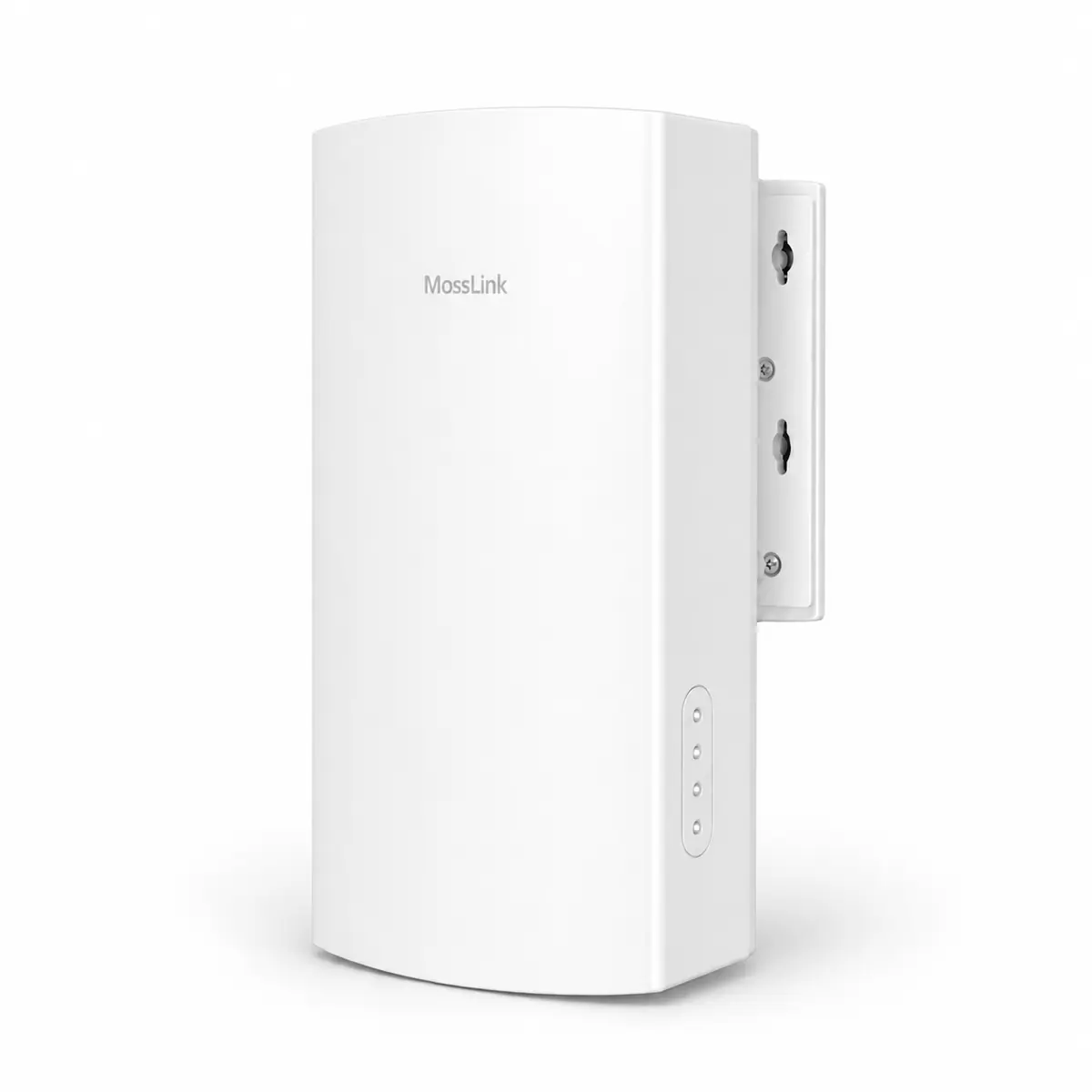
X303 Cloud-Managed AX3000 Wi-Fi 6 Outdoor AP, IP67
X303
Wi-Fi 6 (802.11ax/ac/a/n/g/b) · Dual-Band (2.4GHz + 5.8GHz) · AX3000 (573.5 + 2402 Mbps)
Weatherproof outdoor Wi-Fi access points for campuses, parks, sports venues, industrial yards, and public spaces — providing high-throughput coverage in exposed environments where indoor APs cannot reach
Site-specific topology · Bill of materials · OEM/ODM options
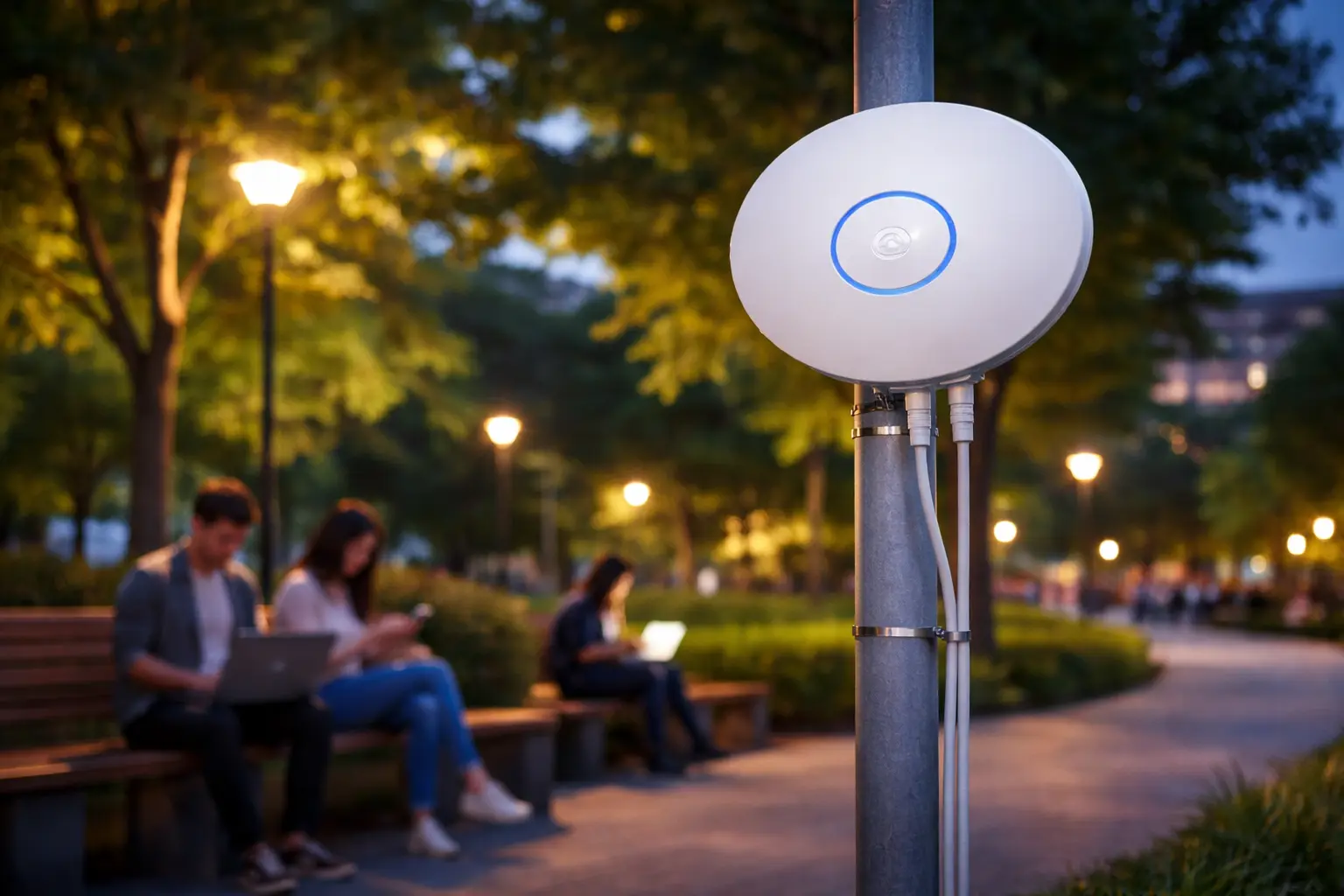
Reference Topology
Wireless coverage requirements do not stop at the building door. University students need Wi-Fi on outdoor terraces and sports courts. Hotel guests expect connectivity at the pool and in courtyard restaurants. Municipal authorities deploy public Wi-Fi in parks and transit hubs. Industrial facilities need connectivity in outdoor yards, loading docks, and around building perimeters.
Standard indoor access points fail in these environments within months. Moisture penetrates housings not rated for outdoor use, causing corrosion and board failure. UV radiation degrades plastics not formulated for sun exposure. Temperature extremes beyond the rated range cause thermal shutdowns or permanent component damage. The result is frequent hardware failures and maintenance costs that make cheap indoor APs more expensive than purpose-built outdoor hardware.
System integrators and IT departments specifying outdoor Wi-Fi need access points that carry verifiable IP ratings and temperature range certifications — not marketing labels. And with outdoor deployments often requiring 20–100 APs across a large site, pricing must be competitive at volume.
MossLink’s outdoor AP lineup is organized by coverage pattern and deployment type:
General Outdoor Coverage: The APM6-AX3000 is the volume workhorse — Wi-Fi 6 AX3000, five external 8 dBi dual-band omni antennas, up to 256 clients across both bands, a single gigabit 802.3at PoE port, 4 kV lightning protection, IP67, and under 16 W draw. It suits campuses, courtyards and industrial yards where coverage radiates outward from each pole or wall mount.
Cloud-Managed Coverage: The X303 carries the same AX3000 radio in an IP67 housing with internal 7 dBi omni antennas and a second gigabit port, and adds cloud management through a web console and mobile app alongside standalone web GUI and AC control. It runs as AP, gateway, bridge or mesh node. Pick this one when the operator wants to see the site remotely rather than drive to it.
High-Density and Fiber Uplink: The APH6-AX5400 steps up to AX5400 (574 + 4804 Mbps) with 192 concurrent clients, detachable N-type antennas, a gigabit SFP port for a fiber uplink, and a −40 °C to +70 °C range. Its sibling the APH6-AX3000 has the same detachable-antenna and SFP layout at AX3000 with 128 clients, and both accept an optional 10 dBi omni upgrade when a pole needs more reach in one plane.
2.5 Gbps Uplink: The APH5-AX830 pairs AX3000 with a 2.5 GbE PoE WAN port and 360° adjustable 6 dBi antennas in an IP65 UV-resistant housing, −30 °C to +55 °C. Use it where the wired side, not the radio, was going to be the bottleneck.
Budget Coverage: The YA796 covers basic outdoor connectivity at AC1200 (Wi-Fi 5) with two 5 dBi dual-band omni antennas, 100 Mbps ports, IP65 and around 64 clients per band. It also runs in gateway, repeater and WISP client modes. Specify it for parks, parking lots and perimeters where the traffic is light and the unit count is high — not for dense areas.
Four decisions cover almost every outdoor project:
Enclosure and temperature, not just “outdoor”. IP65 resists jetted water; IP67 survives temporary immersion. More important in practice is the temperature range: the APH6-AX5400 is rated −40 °C to +70 °C, while the IP65 models stop at +55 °C. A closed enclosure on a dark roof in summer runs far hotter than ambient.
Fixed or detachable antennas. Built-in antennas are cheaper, tidier and harder to break. Detachable N-type antennas — on the APH6 pair — let you swap in higher-gain elements later, which matters when the coverage requirement changes after the poles are already up.
Uplink port speed. A gigabit port is fine for AX3000. AX5400 or a busy AP can outrun it, which is why the APH6 models offer SFP and the APH5-AX830 offers 2.5 GbE. Decide this before the cabling goes in, not after.
Management model. All models run standalone from a web GUI. Cloud and AC management are available on the X303 and APH6-AX3000; on the ceiling-AP side, cloud runs through a ZW500 gateway. If a single dashboard across sites is a requirement, confirm the management path before you fix the model list.
Outdoor Wi-Fi planning differs from indoor in key ways:
MossLink’s technical team provides coverage planning consultation for large outdoor sites, including AP placement recommendations based on site dimensions and target coverage requirements.
Every model in this range takes 802.3at PoE at 48 V, with a DC input as the alternative. None of them require 802.3bt, so a standard at-capable switch port is enough — but check the total budget on the switch, not just the per-port rating. Six outdoor APs at up to 22 W each will exhaust an entry-level 96 W switch once cameras share the same box.
Two practical constraints decide the layout. Ethernet still stops at 100 m, so an AP at the far end of a car park needs either a mid-span switch in a weatherproof enclosure or a bridge hop. And every outdoor cable run is a lightning path: the APM6-AX3000 carries 4 kV protection on board, but the switch at the other end of that cable usually does not, which is why surge-protected PoE switches earn their price on outdoor sites.
For sites where trenching to the pole is not viable at all, a wireless bridge can carry both power upstream and data downstream — see the PoE switch and bridge pairing guide.
A site plan or satellite image with dimensions, where power and cabling already reach, the surface types between APs (open ground, dense trees, metal structures), expected concurrent users per area, and the climate extremes at the site. We come back with AP count, model, mounting height and a bill of materials.
System integrators and property managers using MossLink outdoor APs report consistent operation through full seasonal cycles, with IP67 hardware requiring no maintenance between scheduled replacement intervals. The PoE-powered design eliminates outdoor electrical work at each AP location, reducing installation cost by 30–50% compared to deployments requiring separate power circuits.
MossLink supplies outdoor access points factory-direct with OEM customization available for integrators and brands. CE/FCC certification is standard on all models. Contact us for volume pricing, site planning support, and OEM program details.
X303
Wi-Fi 6 (802.11ax/ac/a/n/g/b) · Dual-Band (2.4GHz + 5.8GHz) · AX3000 (573.5 + 2402 Mbps)
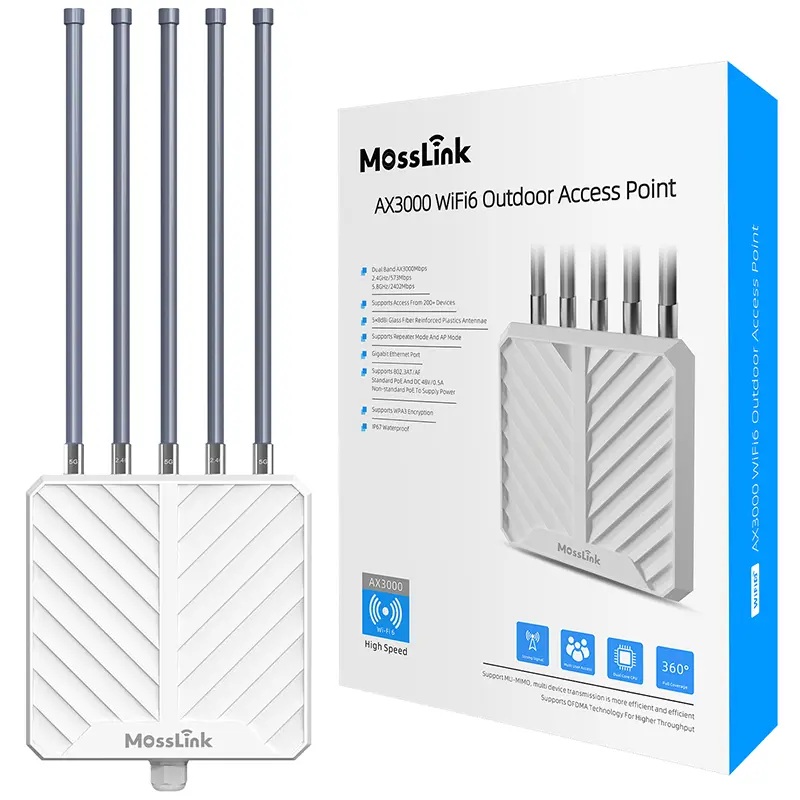
APH6-AX3000
Wi-Fi 6 (802.11ax) · Dual-Band (2.4GHz + 5GHz) · AX3000 (574 + 2402 Mbps) · 802.3at (48V)
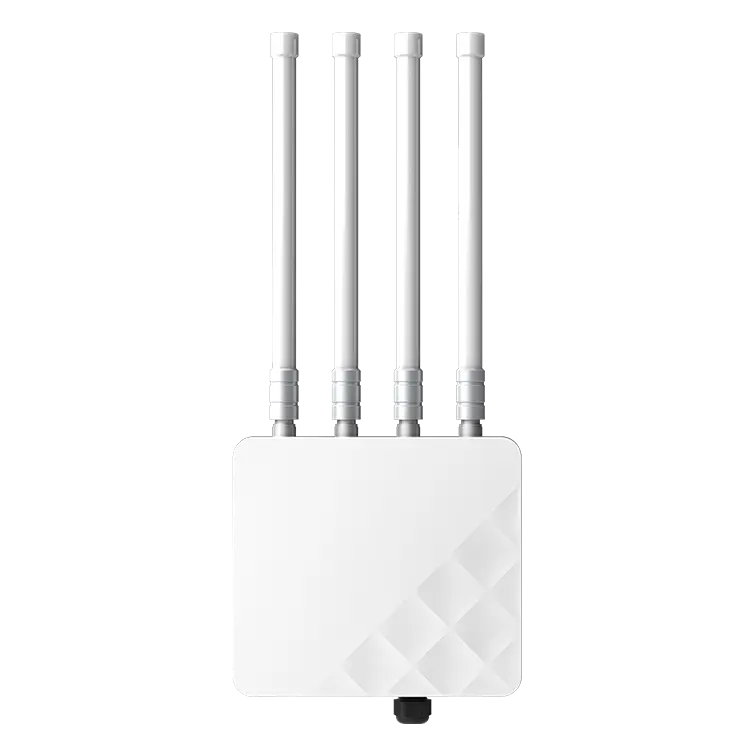
APH6-AX5400
Wi-Fi 6 (802.11ax) · Dual-Band (2.4GHz + 5GHz) · AX5400 (574 + 4804 Mbps) · 802.3at (48V)
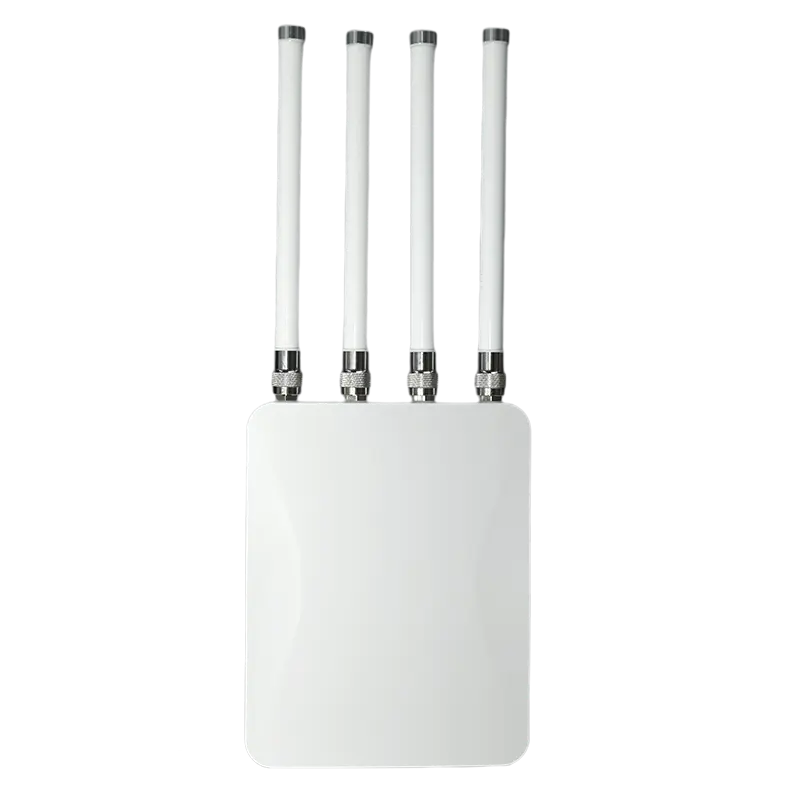
APH5-AX830SFP
Wi-Fi 6 (802.11ax) · Dual-Band (2.4GHz + 5GHz) · AX3000 (574 + 2402 Mbps) · 802.3at (48V)
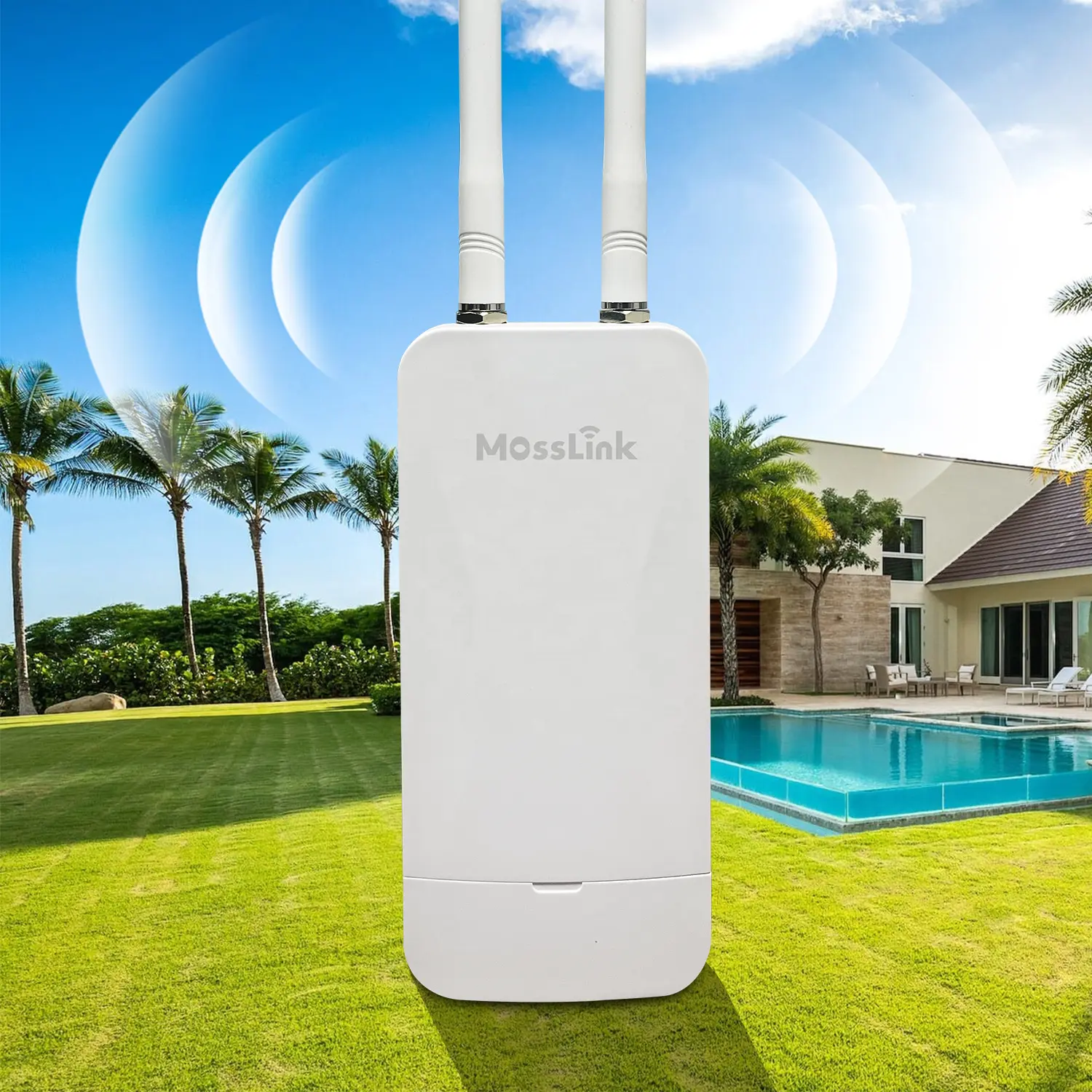
YA796
Wi-Fi 5 (802.11ac) · Dual-Band (2.4GHz + 5GHz) · AC1200 (300 + 866 Mbps) · 24V PoE / 12V DC 1A
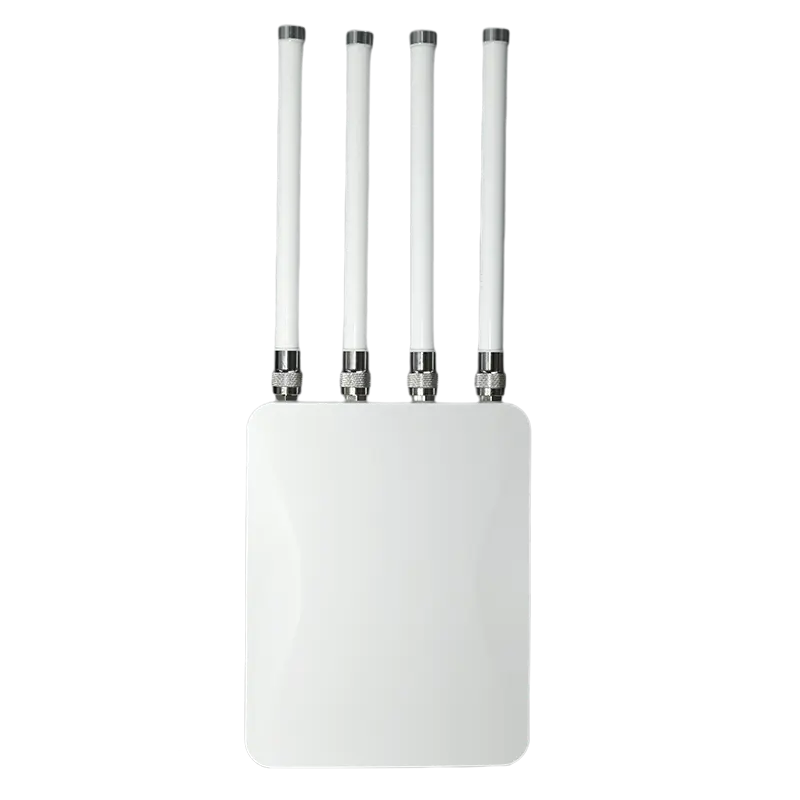
APH5-AX830
Wi-Fi 6 (802.11ax) · Dual-Band (2.4GHz + 5GHz) · AX3000 (574 + 2402 Mbps) · 802.3at (48V)
In-depth guides and case studies relevant to this deployment.
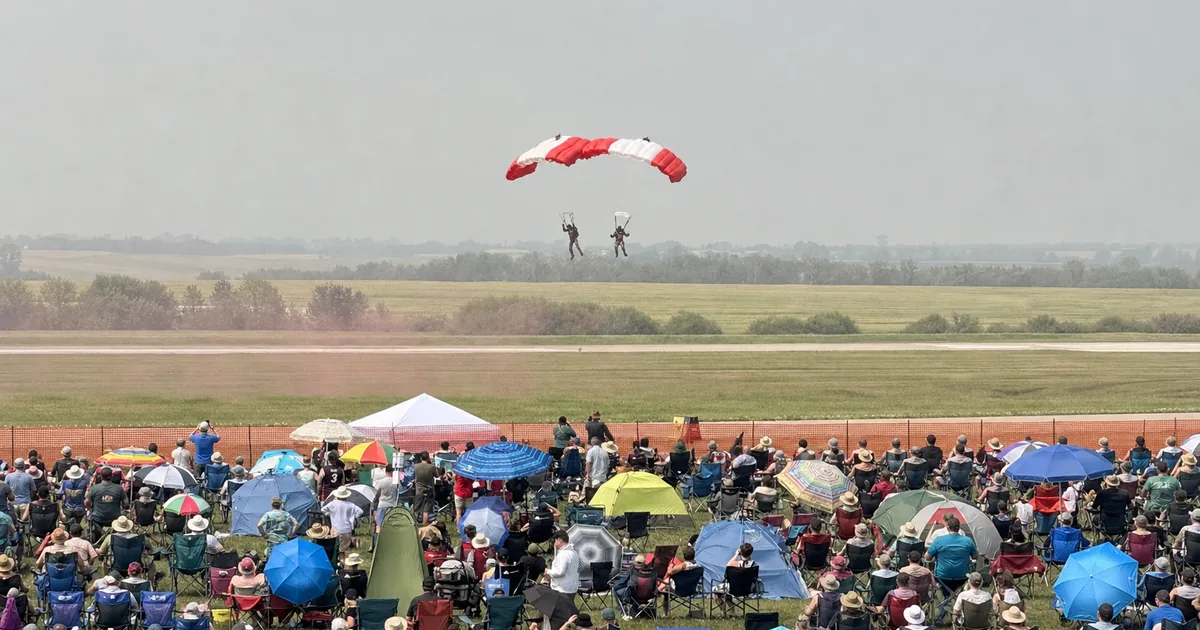
No fiber across a 300,000 m² crowd zone. See how 59 X303 Wi-Fi 6 APs and about 30 OG530 5G CPEs addressed a 15,000-person design load.
Read Article →
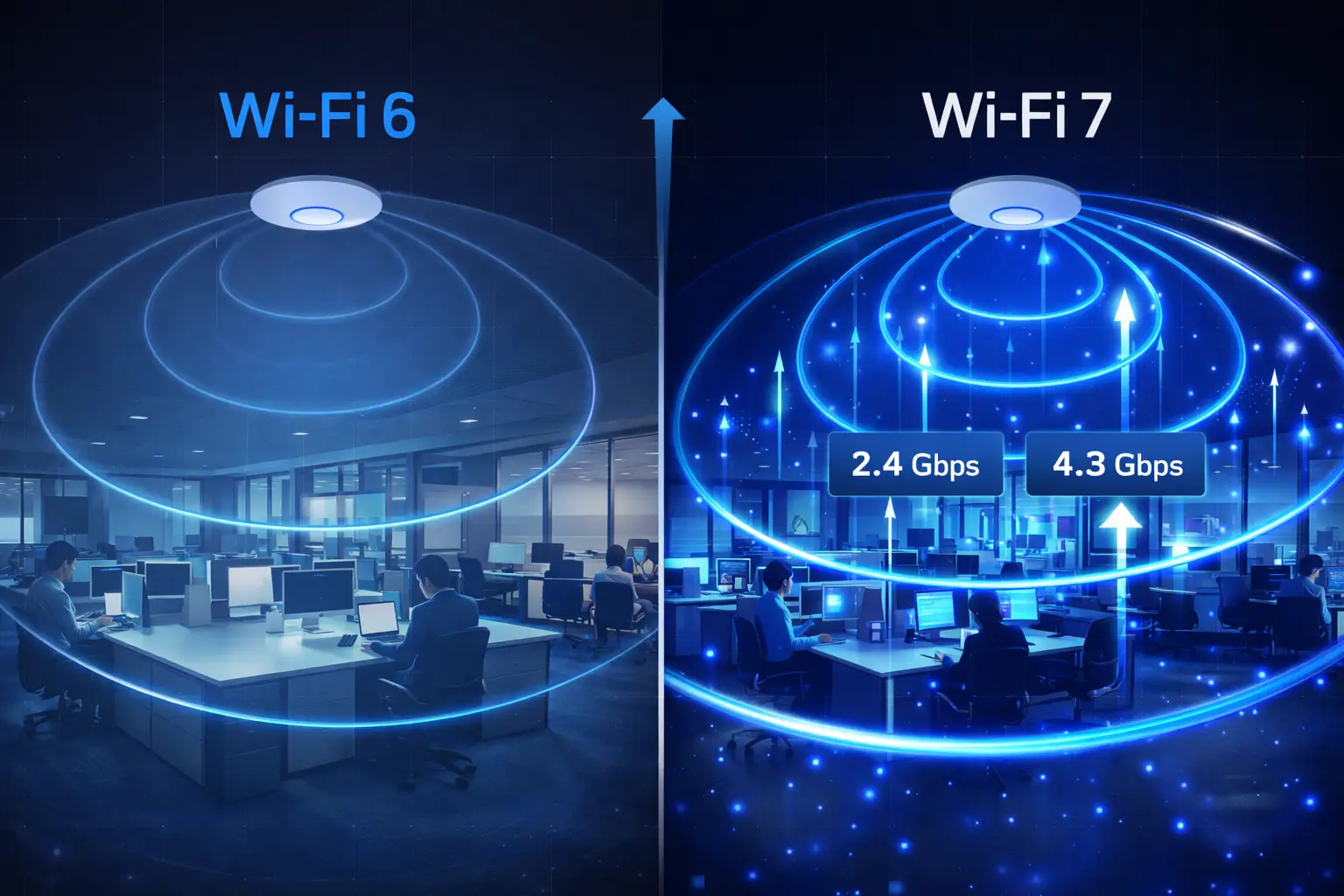
Sourcing Wi-Fi 7 APs? Many suppliers quote from renders. Six checks to verify real production — chipset platform, MOQ from 100 units, white-label limits.
Read Article →
Your neighbours' routers are sitting on the same channels as yours, through concrete that scatters every signal. Here's the channel plan, AP placement, and band strategy that stops apartment WiFi interference — with the exact channels to use.
Read Article →
Practical answers for planning a deployment like this one.
Let our team design a customized outdoor wi-fi networking solution for your project. Get expert guidance and factory-direct pricing.