
PtP & PtMP Bridges
PtP & PtMP Wireless Bridge Manufacturer
Long-range outdoor wireless bridge links replacing fiber runs for CCTV backhaul, ISP distribution, campus inter-building connectivity, and industrial site networking
Site-specific topology · Bill of materials · OEM/ODM options
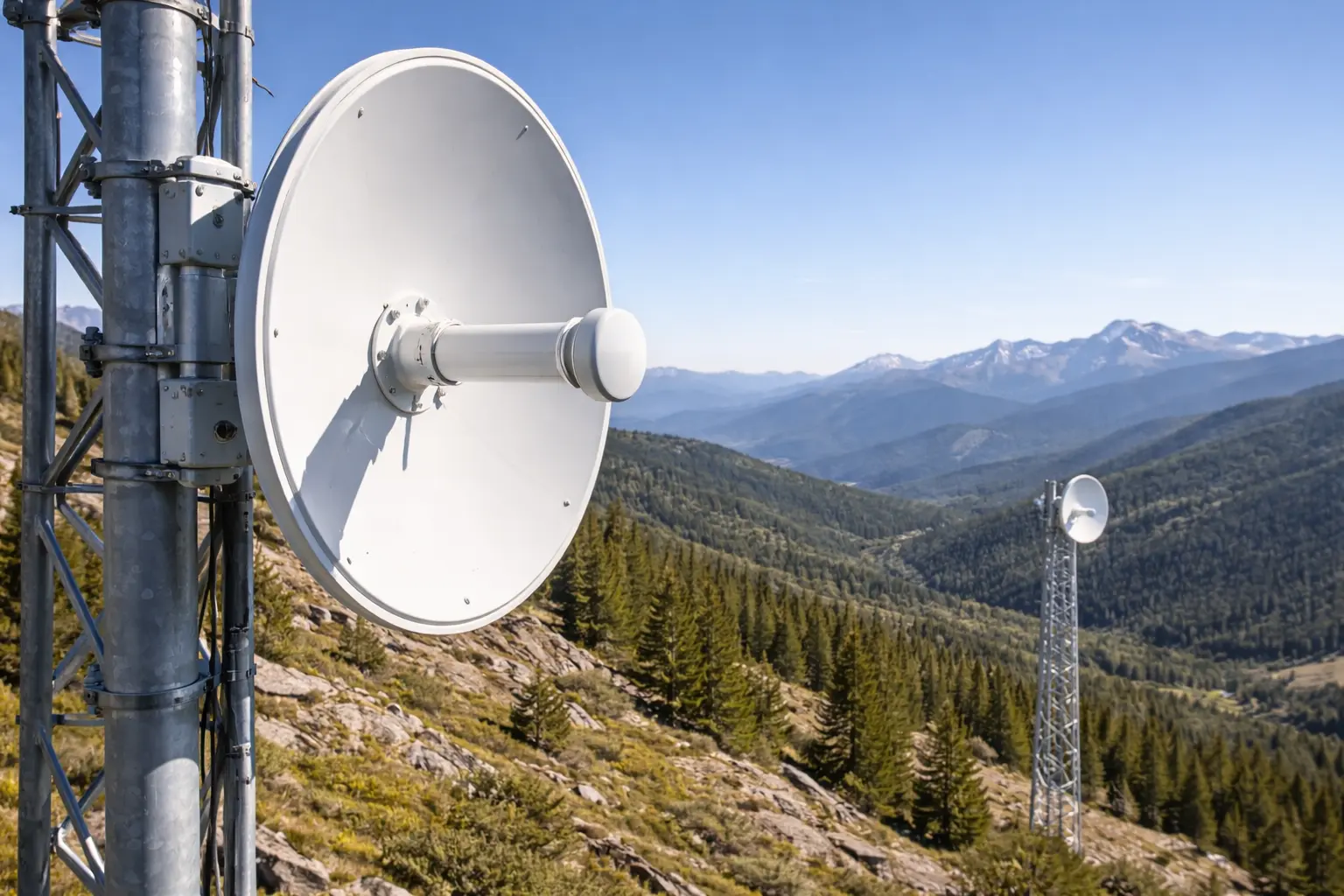
Network Architecture
Reference Topology
The Challenge
Every networked site has boundaries where fiber becomes impractical. A factory needs connectivity to a warehouse across a road. A surveillance system requires video from cameras mounted on poles 3 km from the NVR. An ISP needs to serve a hilltop community 12 km from the nearest fiber point. In each case, digging trenches or running overhead cable is either physically impossible, prohibitively expensive, or both.
Wireless bridges solve this problem — but the market is fragmented. Budget equipment cannot sustain reliable links beyond 2–3 km or deliver the throughput that HD CCTV or enterprise applications demand. Proprietary systems lock buyers into expensive controller licenses and vendor support contracts. System integrators need equipment that performs predictably, ships with proper certifications, and is available factory-direct at competitive pricing.
Our Approach
MossLink’s wireless bridge lineup is built around three performance tiers, covering every common application:
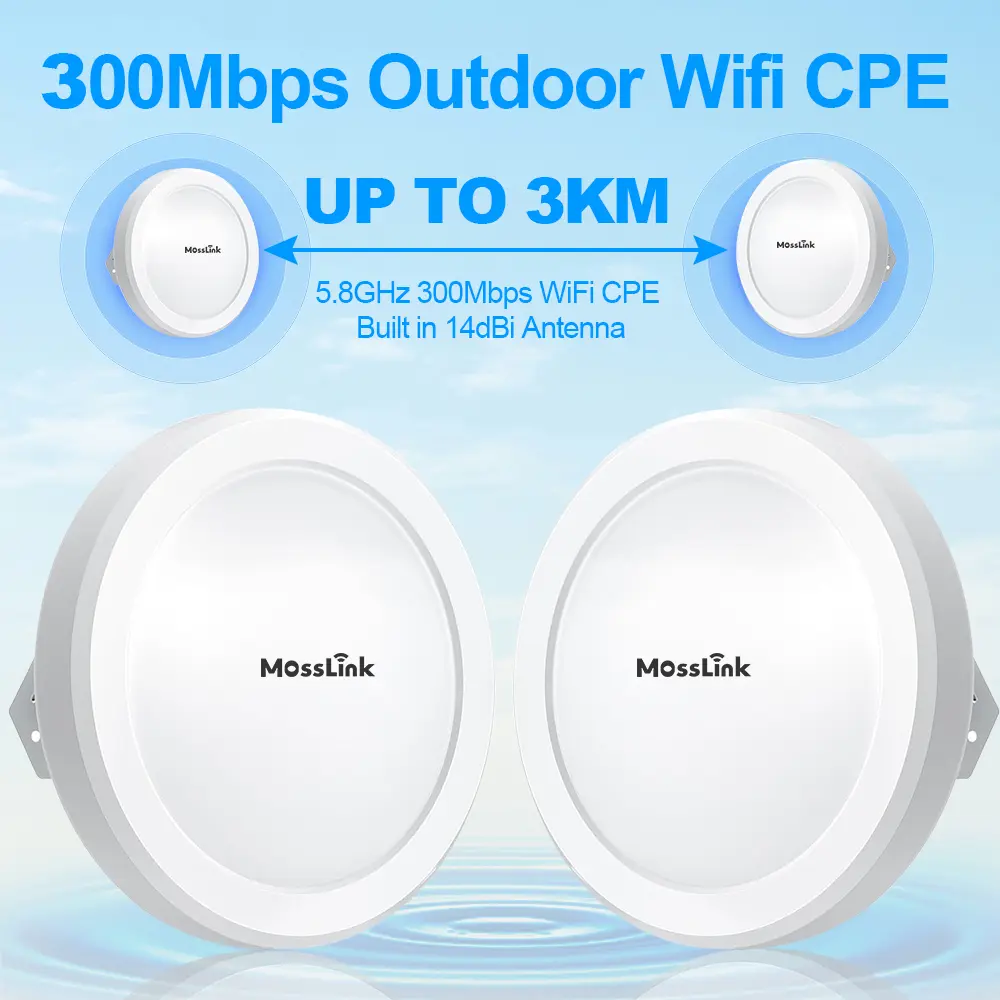
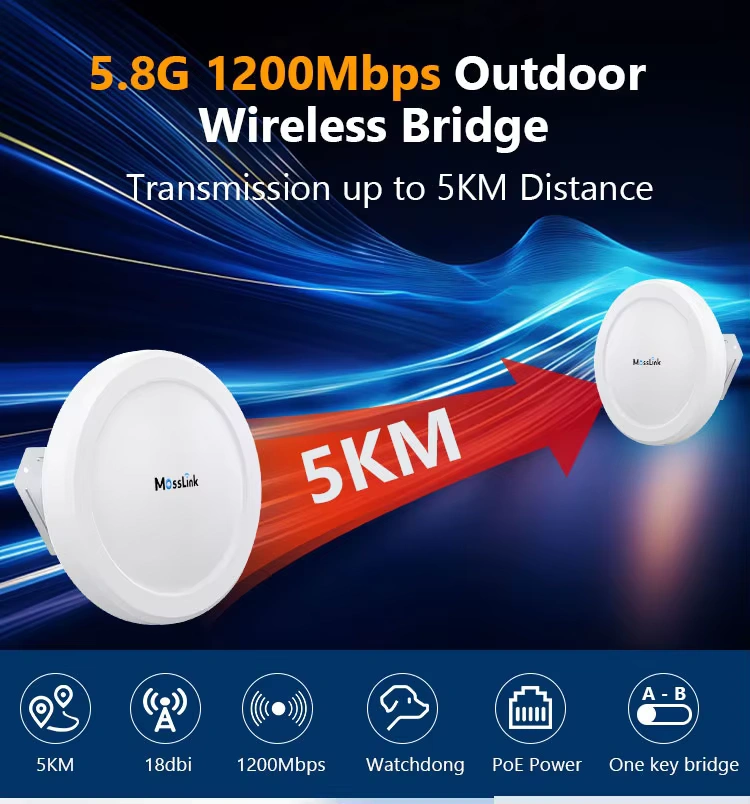
Entry Tier — CCTV & Remote Monitoring: The WB530 and WB451H series handle links from 500 m to 5 km. These compact units mount directly on camera poles or walls, connecting remote cameras to an NVR or network switch without running cable. Throughput of 150–300 Mbps supports simultaneous feeds from 6–10 IP cameras. IP65 housing keeps them operational through rain, dust, and temperature extremes.
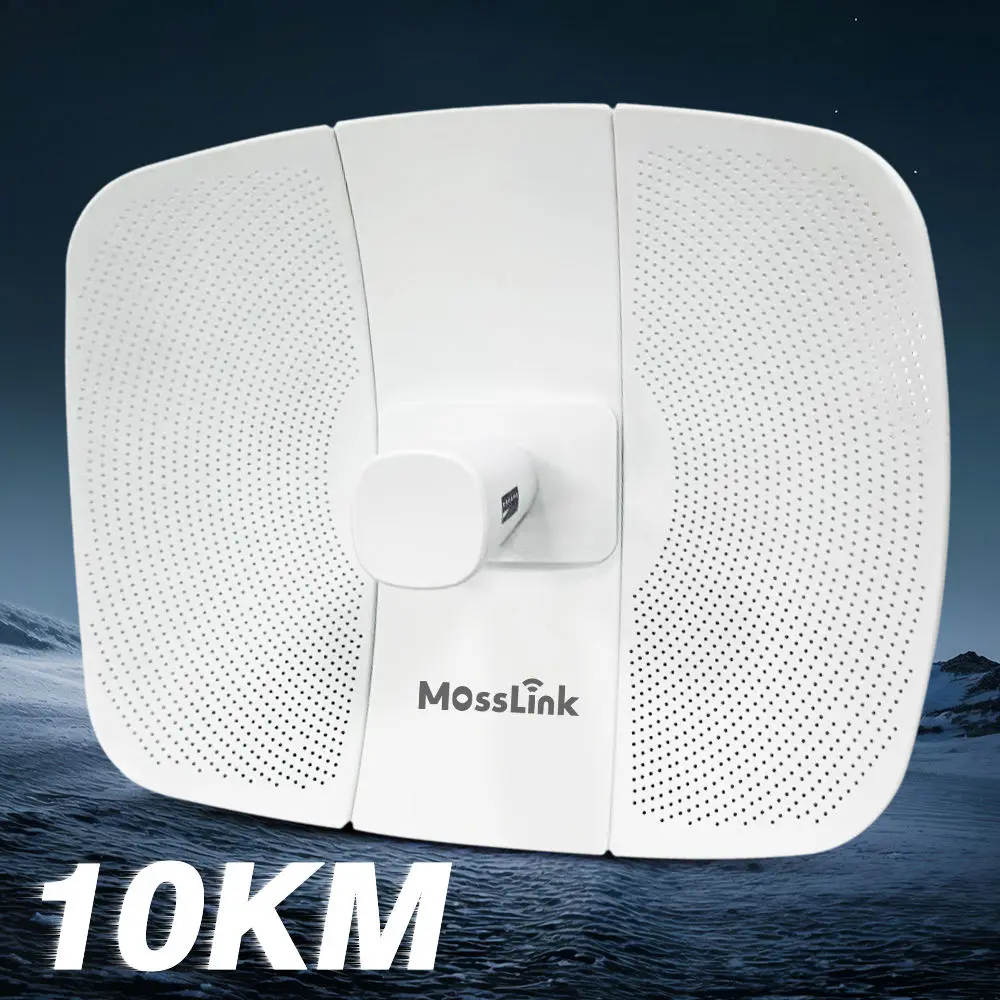
Mid Tier — Campus & Industrial: The WB1500 and WB2500 both carry a 26 dBi dual-polarised parabolic dish and cover 10–15 km links, at 300 Mbps and 866 Mbps respectively. These are the workhorses for inter-building campus connectivity, industrial site networking, and mid-range ISP distribution links.
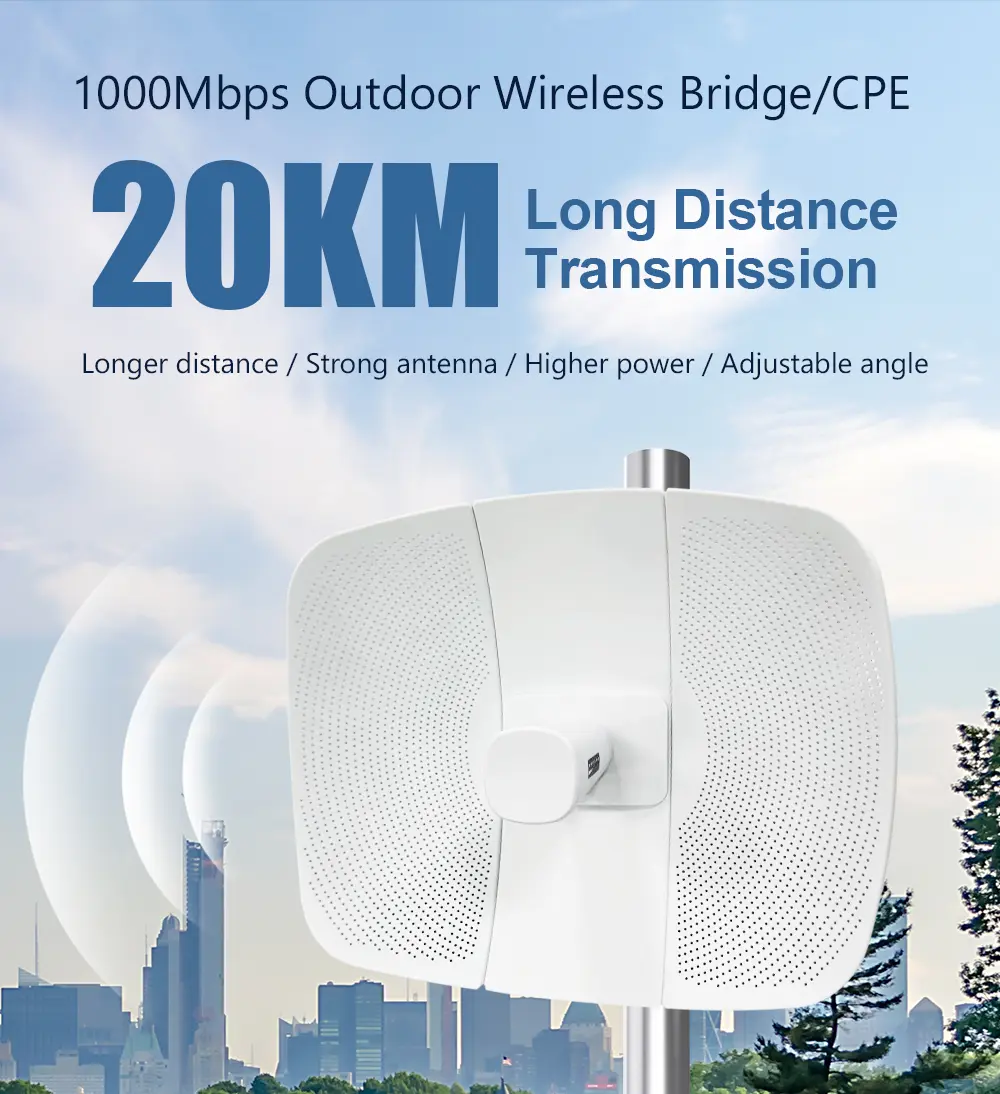
Long-Range Tier — ISP Backbone: The WB5axH6-35 leads the lineup with a built-in 33 dBi parabolic dish and a Wi-Fi 6 (802.11ax) radio — 2402 Mbps PHY, 900+ Mbps of real PtP throughput, and 20 km+ range with clear line of sight. It is the one model in the range with a gigabit SFP port, so a tower site can aggregate straight into a fiber switch. IP67 housing and a −40 °C to +70 °C operating range suit remote tower installations in any climate.
Application Scenarios
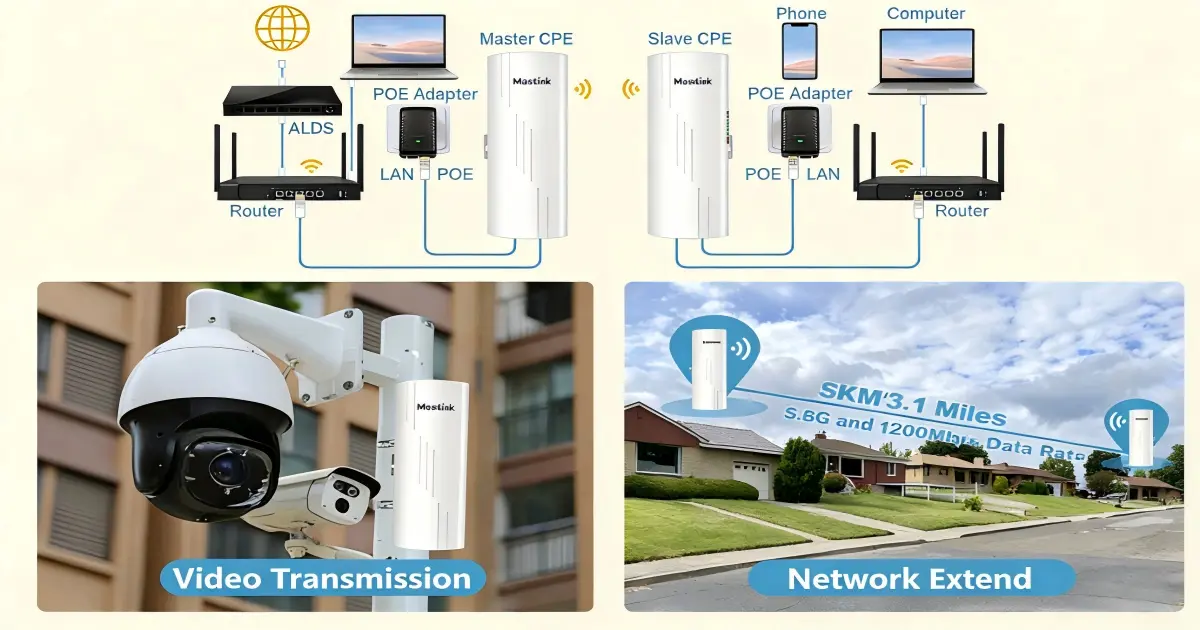
CCTV Backhaul: Replace cable runs between IP cameras and NVR. A single WB530 pair connects a cluster of cameras on a building perimeter, parking lot, or road section to the control room — eliminating expensive conduit installation.
Campus Inter-Building Links: Connect dormitory blocks, lecture buildings, and administration across a university campus. WB1500 pairs deliver gigabit-class throughput that supports VoIP, video conferencing, and campus-wide cloud applications.
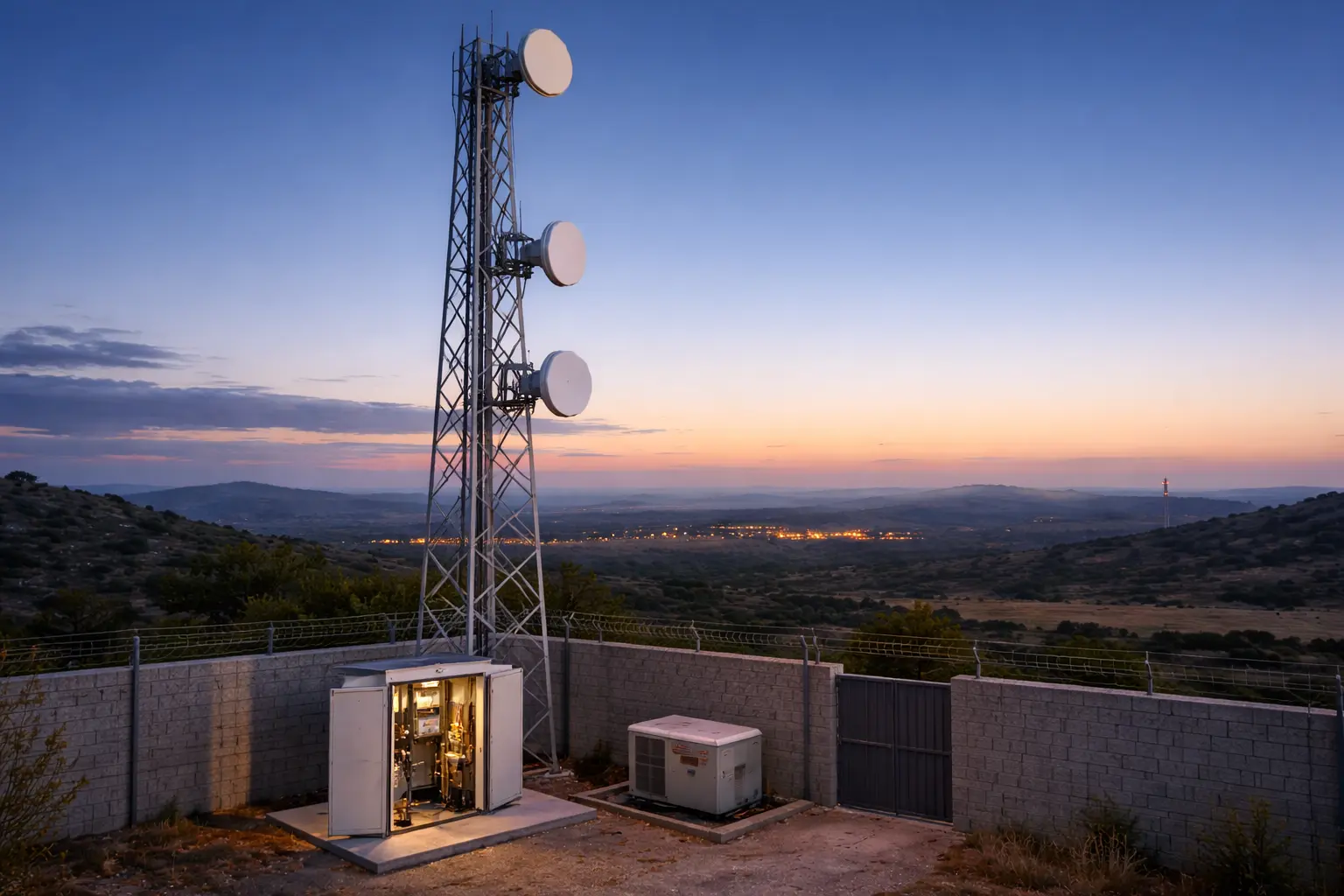
ISP Last-Mile Distribution: WB5axH6-35 units at a hilltop tower beam connectivity outward in multiple directions, reaching subscriber CPE routers 10–20 km away in rural communities. This replaces the need for fiber to each distribution point.
Industrial Site Networking: Quarries, mines, port terminals, and construction sites use wireless bridges to connect remote equipment control stations, weight scales, and access control points back to the office network without trenching through hard surfaces.
Which Bridge for Which Distance?
Distance is the first filter, and it is the one buyers most often get wrong — a datasheet range assumes clear line of sight and enough mounting height, not a hedge line in the way.
| Link distance | Models | Antenna | Real throughput | Typical use |
|---|---|---|---|---|
| 0–4 km | WB530 | 14 dBi built-in dish | 300 Mbps | Camera pole to NVR, yard to office |
| 0–5 km | WB610H · WB730 | 16 dBi / 14 dBi | 900 Mbps | Building to building, PoE pass-through to a camera |
| 10–15 km | WB1500 · WB2500 | 26 dBi dish | 300 / 866 Mbps | Campus backbone, mid-range ISP distribution |
| 20 km+ | WB5axH6-35 · WB6axH6-20 | 33 dBi dish | 900+ Mbps | Tower-to-tower ISP backbone, SFP into fiber |
Two picks worth calling out. The WB610H carries PoE in and out on both ends, so the remote unit can power the camera it is backhauling — one cable up the pole instead of two. The WB6axH6-20 runs in the 6 GHz band, which in most markets is far emptier than 5.8 GHz; check that 6 GHz outdoor use is permitted in your country before you specify it.
Honest range numbers matter more than headline ones. Our guide on how far a wireless bridge actually reaches breaks down what each distance tier costs in tower height and clearance.
PtP or PtMP: Which Architecture?
Point-to-point is one link between two fixed ends. Both radios face each other, all the capacity belongs to that one link, and alignment is a two-person job done once. Use it whenever you are joining exactly two sites.
Point-to-multipoint puts one sector or omni radio at a hub and several client radios around it. The hub’s capacity is shared, so eight subscribers on one sector each get a slice, not the full number on the box. Use it when you have one head-end and several remote sites within the same arc, and when adding a ninth site should not mean adding a ninth radio at the hub.
The mistake we see most often is buying PtMP for two sites because it looks cheaper on paper, then discovering that a shared-medium sector delivers less than a dedicated link would have. Two sites is a PtP job.
What Actually Decides Throughput
Four things, in roughly this order:
Line of sight and Fresnel clearance. A link that clips a tree line at the midpoint loses far more than the tree seems to justify. Height at both ends is usually cheaper than a bigger dish.
Channel width and interference. An 80 MHz channel doubles the theoretical rate of a 40 MHz one and roughly halves your chance of finding it clear in a crowded band. In built-up areas, a narrower clean channel beats a wider dirty one.
Antenna gain and alignment. A 33 dBi dish two degrees off boresight performs worse than a well-aimed 26 dBi one. Budget the alignment time.
PHY rate versus real rate. The number on the box is the modulation ceiling in both directions combined. Plan on roughly half of it as sustained TCP throughput, which is why our long-range models quote 900+ Mbps actual against a 2402 Mbps PHY.
What to Send Us for a Link Design
Coordinates or a map pin for both ends, the height available at each end, what sits between them, the throughput you need, and how many links you are planning. We come back with a model recommendation, the mounting height each end needs, and a bill of materials — before you order a sample.
Results
MossLink’s 19-model wireless bridge range gives system integrators and ISPs a single-vendor solution covering every link distance and throughput requirement. Factory-direct supply eliminates distributor markups, and all models ship with CE/FCC documentation ready for regulatory approval. OEM customization is available for private-label programs, making MossLink a reliable manufacturing partner for brands and integrators building their own product lines.
Related Solutions
- Rural & Long-Range Wireless Backhaul — multi-hop backbones for ISPs and remote communities
- Starlink Internet Distribution — using bridges to spread one satellite uplink across a property
- Outdoor CCTV Wireless Backhaul — bridge links carrying camera traffic instead of user traffic
Products Used in This Solution
NEW 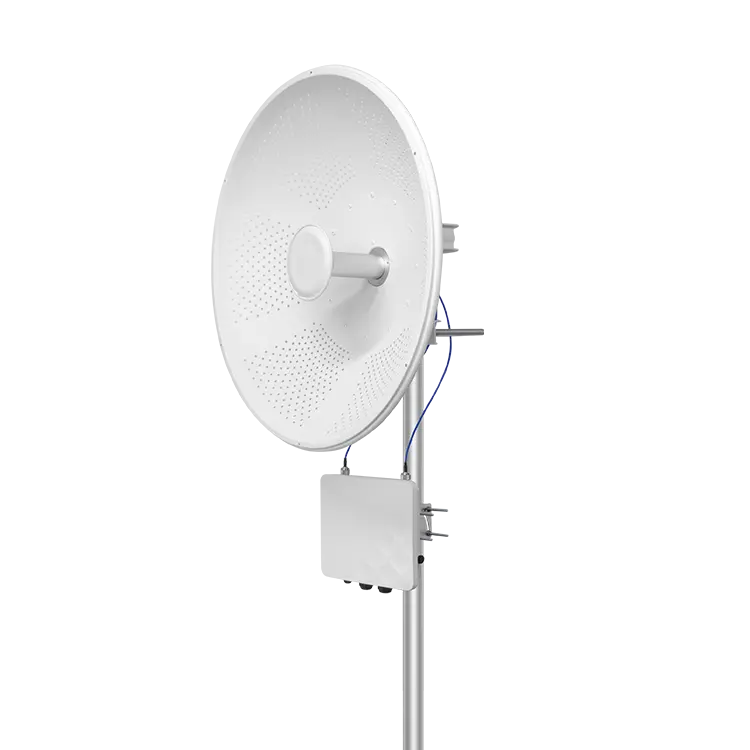
Related Articles
In-depth guides and case studies relevant to this deployment.
Buying Guide
How to Set Up a Wireless Bridge (Pairing to Internet)
The listing said plug and play — but nothing's playing. A step-by-step wireless bridge setup walkthrough for first-time users, from unboxing to internet.
Read Article →
Buying Guide
How Far Can a Wireless Bridge Reach? (Honestly)
A 40km @ 1Gbps datasheet claim quietly assumes two 37m towers and a perfectly clear path. Real distance tiers from 1km to 40km — and what each one costs.
Read Article →
Buying Guide
How to Pick the Right PoE Switch for Wireless Bridges
One PoE switch powers your bridge, cameras, and APs — or nothing boots. Match passive 24V vs 802.3af/at, size the watts, and spec a kit that works.
Read Article →
Frequently Asked Questions
Practical answers for planning a deployment like this one.
What is the maximum range of MossLink wireless bridges?
The WB5axH6-35 achieves point-to-point links up to 35 km under clear line-of-sight conditions with its 29 dBi dish antenna. For shorter links requiring high throughput, models like the WB2500 cover 1–15 km at up to 2.5 Gbps. Most CCTV and ISP applications operate in the 1–20 km range where multiple models apply.
What throughput can I expect for a 5 km CCTV backhaul link?
At 5 km with clear line-of-sight, the WB1500 delivers 300 Mbps full-duplex, supporting 10–15 simultaneous 4 MP IP cameras at H.265 encoding. The WB530 handles 6–8 cameras at the same distance. For higher camera counts or 4K streams, the WB2500 at 867 Mbps is recommended.
Are your wireless bridges compatible with third-party switches and routers?
Yes. MossLink bridges operate as transparent Layer 2 devices. They present standard Ethernet interfaces on both ends, making them compatible with any brand of switch, router, or NVR. No proprietary controller software is required — basic configuration is done through a browser-based web UI.
Do you offer OEM wireless bridges with custom branding?
Yes. MossLink offers OEM customization including custom logo on the housing, private-label web interface, custom SSID defaults, and branded packaging. ODM services are available for custom hardware configurations. Contact our sales team for MOQ and lead time details.
What certifications do your wireless bridges hold?
MossLink wireless bridges hold CE (Europe), FCC (United States), and RoHS certifications as standard. IC (Canada) and SRRC (China) certifications are available on select models. Contact us for specific certification documentation for your target market.
Can MossLink wireless bridges run on solar power at off-grid sites?
Yes. MossLink bridges draw 8–15 W in normal operation, well within the capacity of standard solar kits. A single bridge unit running 24 hours consumes 192–360 Wh per day. Paired with an appropriate solar panel and lithium battery kit, the bridge operates continuously through the night and maintains 3–5 days of autonomy during consecutive cloudy weather with no grid power required.
Interested in This Solution?
Let our team design a customized ptp & ptmp bridges networking solution for your project. Get expert guidance and factory-direct pricing.