Rural Connectivity
Rural & Long-Range Wireless Backhaul Solution
Multi-hop wireless backhaul network connecting remote rural communities to fiber PoPs across distances of 5–30 km, over mountainous or agricultural terrain with no existing cable infrastructure
Site-specific topology · Bill of materials · OEM/ODM options
Network Architecture
Reference Topology
The Challenge
Billions of people in rural Africa, South and Southeast Asia, and parts of Latin America live beyond the practical reach of fiber internet. The math is simple: fiber costs $15,000–$50,000 per km to deploy, and a rural village of 200 households cannot generate enough subscription revenue to justify it. Mobile data exists in some areas, but bandwidth is insufficient and costs are prohibitive for sustained broadband use.
The solution is point-to-point wireless backhaul — but equipment must meet demanding criteria. Links must span 10–35 km across terrain with no existing infrastructure. Towers must operate reliably for years without on-site maintenance, in climates ranging from Sub-Saharan heat and humidity to Andean cold. Local communities often have no trained IT staff, so installation must be simple enough for community members or local agents to execute.
At the same time, rural broadband programs — whether funded by governments, development banks, or NGOs — operate under tight budgets. Equipment cost per subscriber connection is scrutinized closely, and procurement often requires international certification documentation.
Our Approach
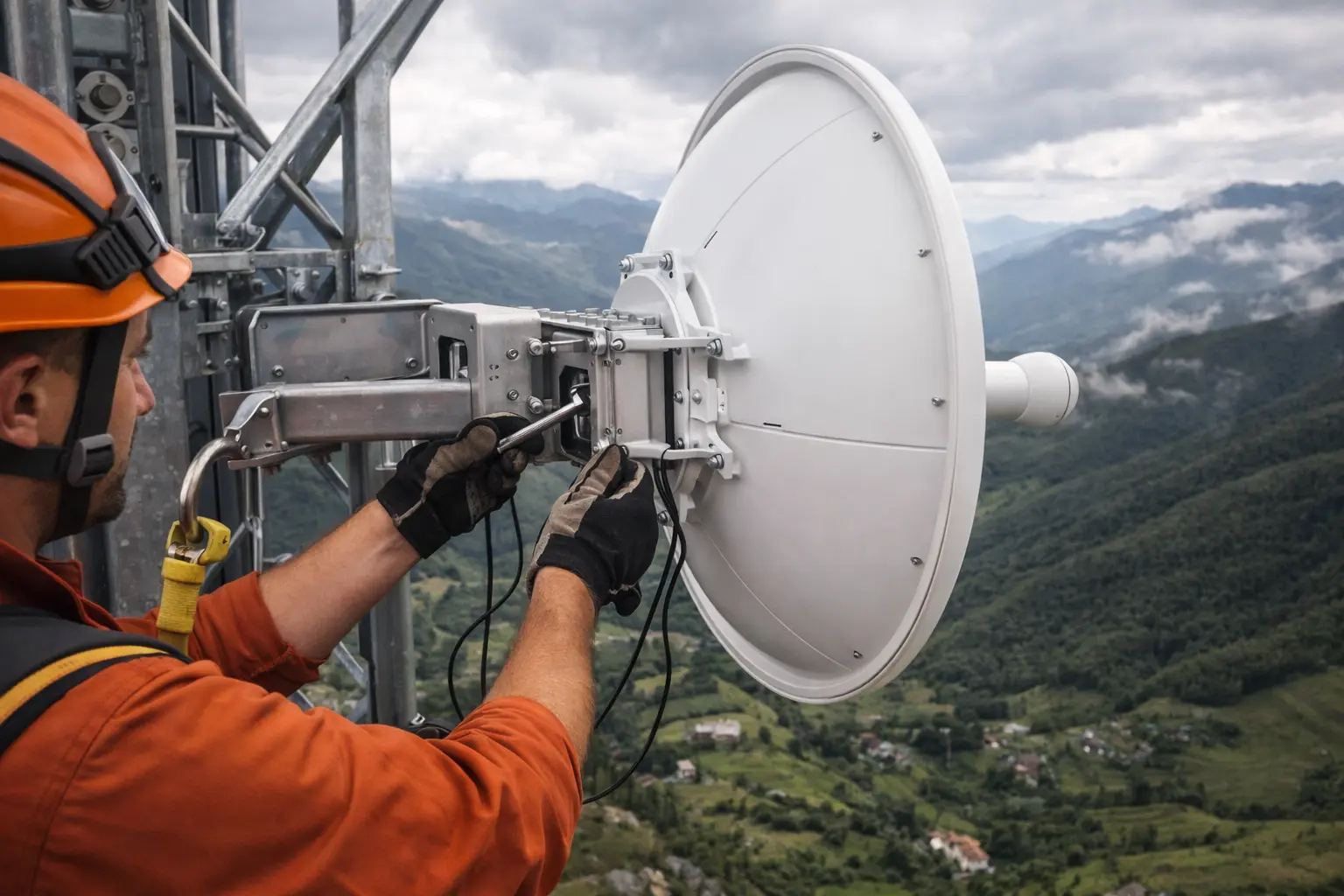
MossLink’s rural backhaul solution is built around a relay chain architecture that adapts to any terrain:
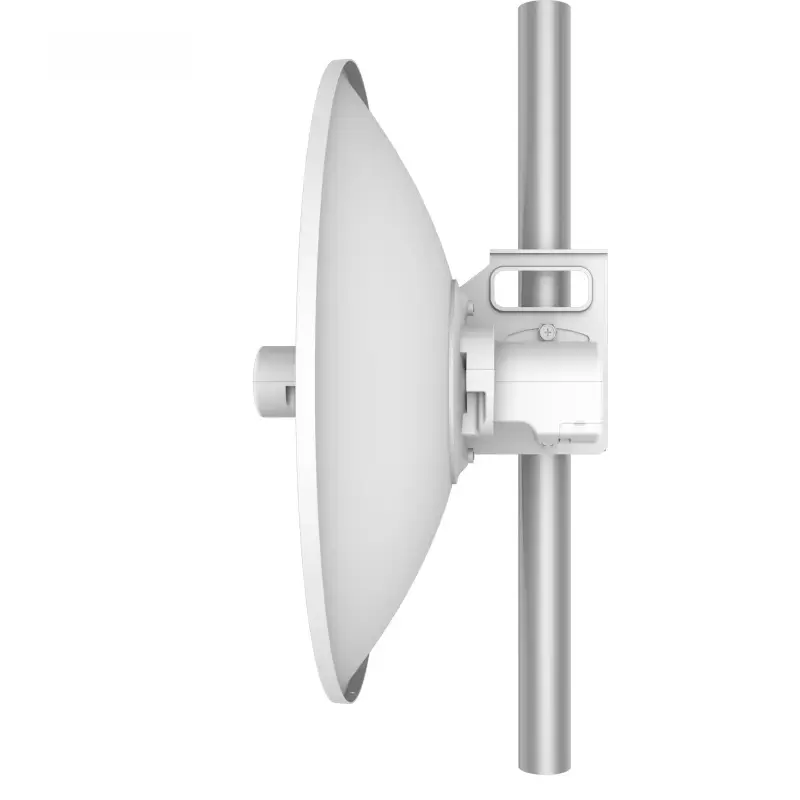
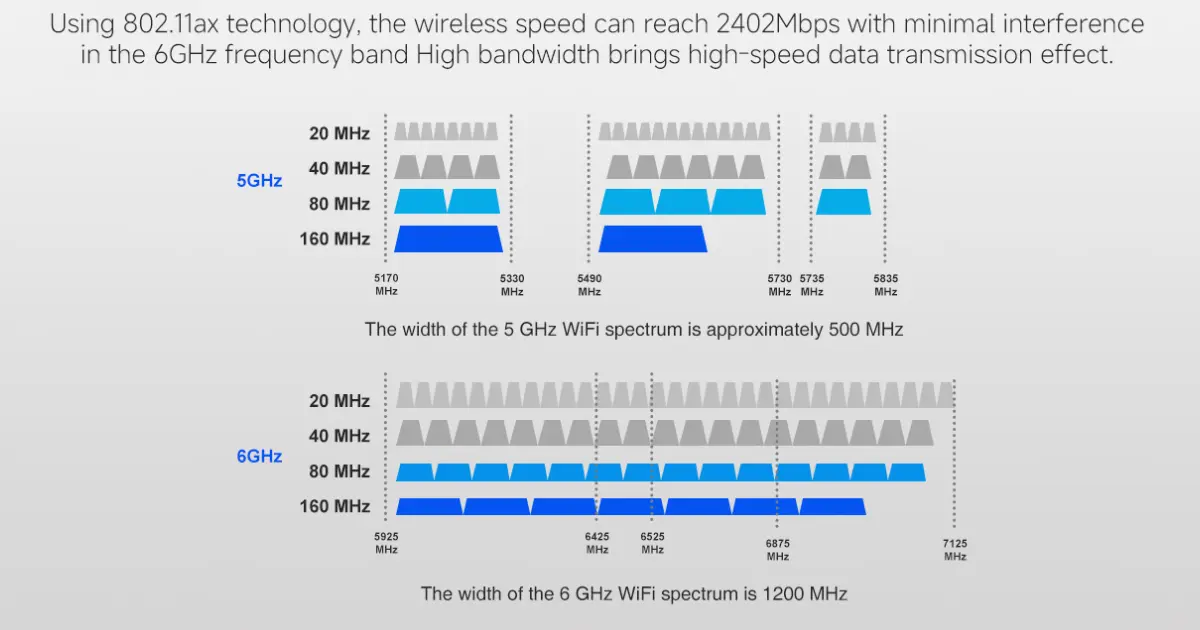
Long-Haul Backbone: The WB5axH6-35 forms the backbone of each link segment. A built-in 33 dBi parabolic dish and a Wi-Fi 6 (802.11ax) radio deliver 2402 Mbps PHY and 900+ Mbps of real throughput at 20 km and beyond, with a gigabit SFP port for the fiber end and a −40 °C to +70 °C range. At rural ISP scale, 20–50 Mbps is typically enough for a village of 50–200 concurrent users, so one backbone link can carry several communities.
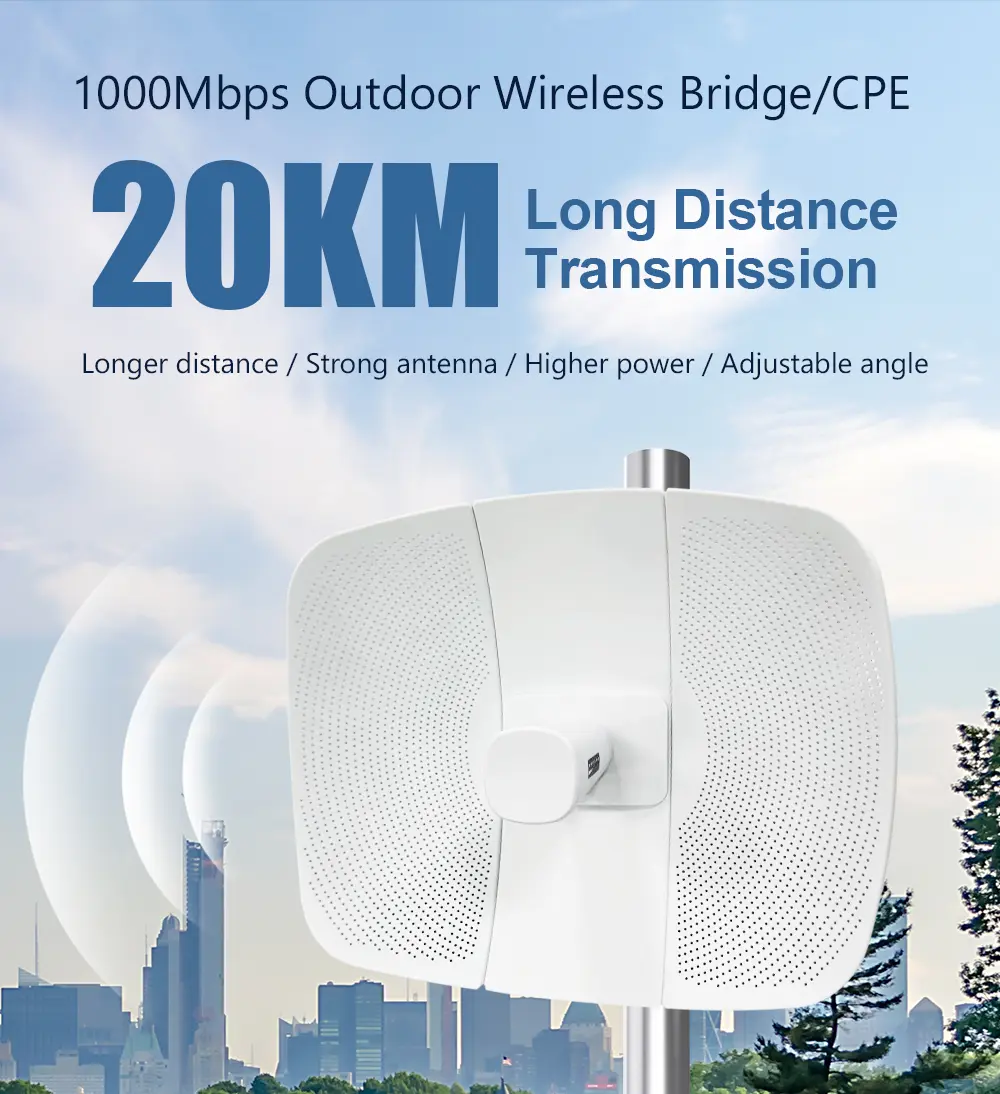
Maximum Range on a Budget: Where the requirement is distance rather than capacity — mountain passes, lake crossings, island links — the WB5acDish-Pro reaches up to 30 km with a 25 dBi integrated dish at 867 Mbps on 802.11ac, and the WB5acH6-29 covers the same 30 km with a 29 dBi external parabolic and a −40 °C to +70 °C rating.
High-Throughput Grid Links: The X5-G25 and X5-G30 use 25 dBi and 30 dBi grid antennas with an 11° beamwidth and 2.5 Gbps ports. The narrow beam is an advantage in crowded spectrum and a liability on a swaying mast — specify them where the mounting structure is rigid.
Mid-Range Distribution: The WB2500 covers distribution segments up to 15 km at 866 Mbps with a 26 dBi dual-polarised dish, connecting relay nodes to sub-distribution points at village centres.
Subscriber-Side: The YA796 mounts on a rooftop pole at each household or small business. It runs AC1200 dual-band with two 5 dBi external antennas, IP65, −30 °C to +55 °C, and supports gateway, AP, repeater and WISP client modes — so the same unit terminates the link and serves the home. Where the household is beyond any tower shot, a YC801 4G router covers the gap instead.
Multi-Hop Architecture
Coverage across complex terrain follows a relay chain:
- Fiber PoP at nearest town — connects to national or regional internet backbone
- Primary backbone tower — WB5axH6-35 PtP link spans 15–30 km to hilltop relay
- Relay node at ridge line — receives backbone, rebroadcasts to secondary coverage area
- Distribution points — WB2500 units at village centers distribute connectivity locally
- Subscriber CPE — YA796 at each home, mounted on pole, connects to distribution point
Each relay node adds roughly 15–30 km of reach. Two hops can cover 50+ km from the fiber PoP. The relay hardware draws single-digit to low-double-digit watts, which is compatible with small solar systems at sites without grid power — size the panel and battery against the actual model datasheet, not a rule of thumb.
What Each Hop Costs You
Every relay is a second link, and links are not free. Three things to budget before the topology is fixed:
Latency and throughput stack up. Each hop adds its own latency and takes its share of capacity. A three-hop chain with 900 Mbps radios does not deliver 900 Mbps at the far end. Plan the far-end service level backwards from the number of hops, not forwards from the radio spec.
Every relay is a site. It needs a mast, power, lightning protection, physical security and someone who can reach it. Relay sites, not radios, are what make remote networks expensive to keep running.
Line of sight decides everything else. Earth curvature alone puts roughly 20 m of bulge at the midpoint of a 30 km link, before any terrain. Height at both ends buys more than a bigger dish does. Our guide to how far a wireless bridge actually reaches sets out what each distance tier really requires.
Powering Remote Sites
Off-grid relays run on solar, and solar sizing is where these projects fail quietly. Size for the worst month, not the average: a panel that carries the site through the dry season can fall short by half during a monsoon week. Budget three days of autonomy in the battery, allow for the charge controller’s own losses, and confirm the radio’s operating temperature covers what the inside of a sealed enclosure reaches at midday. Our solar-powered wireless bridge and outdoor AP guide works through the sizing.
What to Send Us for a Link Plan
Coordinates for the fiber PoP and each community, terrain between them, mast height available at each site, whether grid power exists at each hop, target subscribers per community, and the certification documentation your procurement process requires. We come back with a hop-by-hop topology, model selection and a bill of materials.
Results
Rural broadband programs using MossLink infrastructure report deployment cost reductions of 80% versus equivalent fiber routes, with backbone link stability sufficient for VoIP, video calling, and basic streaming from communities that previously had no internet access. IP67 hardware typically operates maintenance-free for 3–5 years in tropical climates.
MossLink supplies rural backhaul equipment factory-direct with CE/FCC documentation suitable for government and NGO procurement processes. OEM customization for regional branding programs is available. Contact us for project consultation and volume pricing.
Related Solutions
- Starlink Internet Distribution — when the head-end is a satellite dish rather than a fiber POP
- 4G LTE CPE for Carriers & ISPs — reaching the last few homes that no tower shot can see
- PtP & PtMP Wireless Bridge Solutions — link classes and distance tiers for each backbone hop
Products Used in This Solution

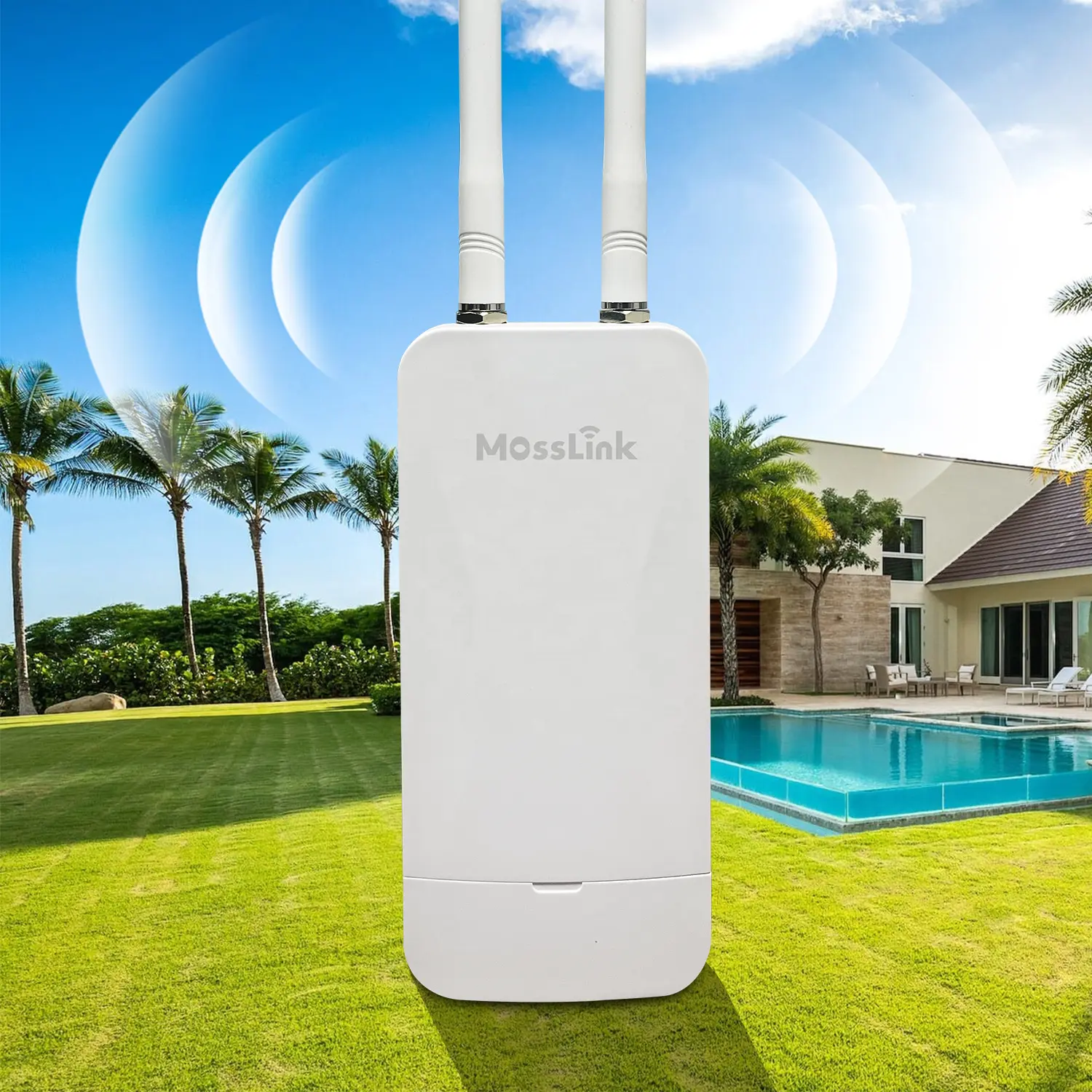
YA796 AC1200 MU-MIMO Outdoor Access Point, IP65
YA796
Wi-Fi 5 (802.11ac) · Dual-Band (2.4GHz + 5GHz) · AC1200 (300 + 866 Mbps) · 24V PoE / 12V DC 1A
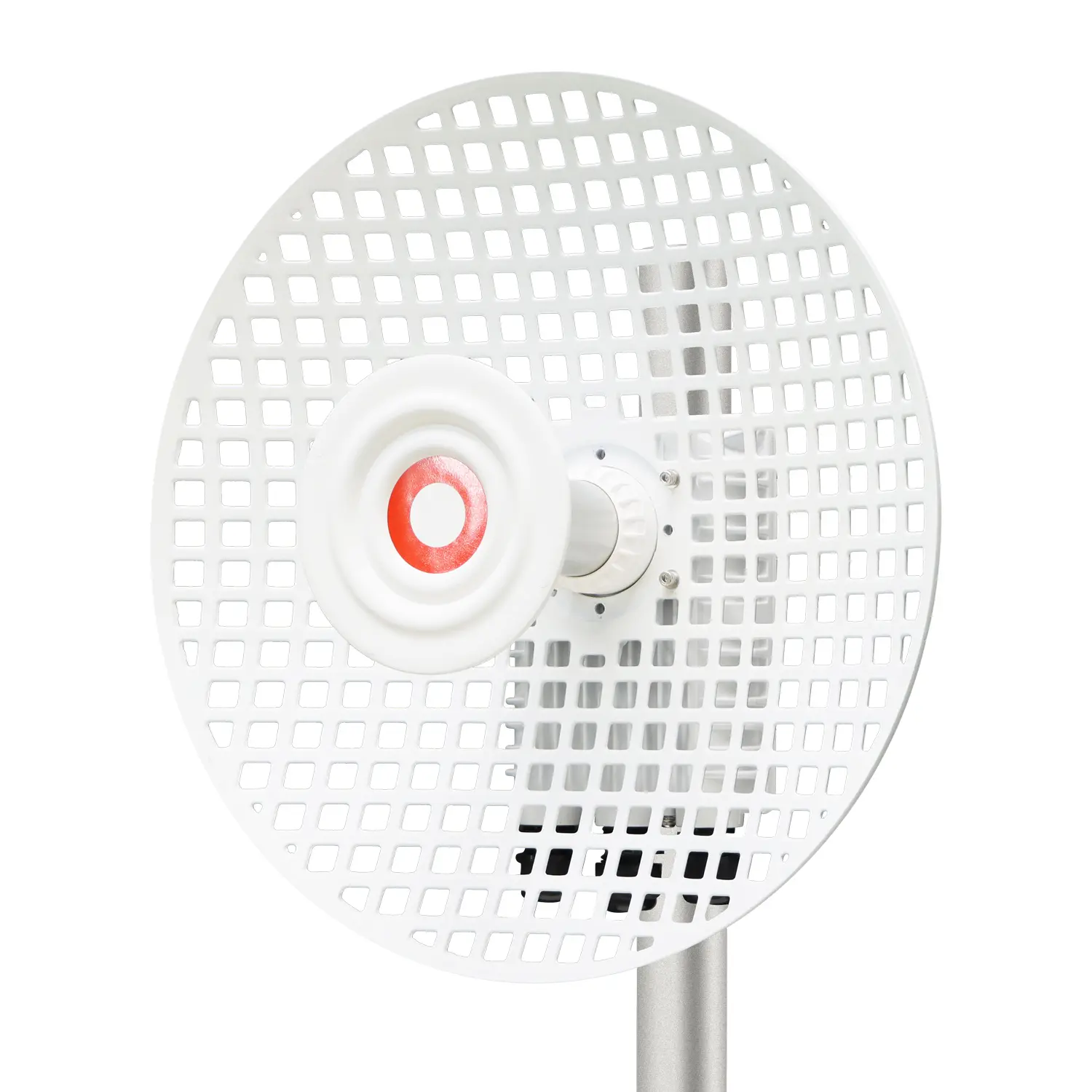
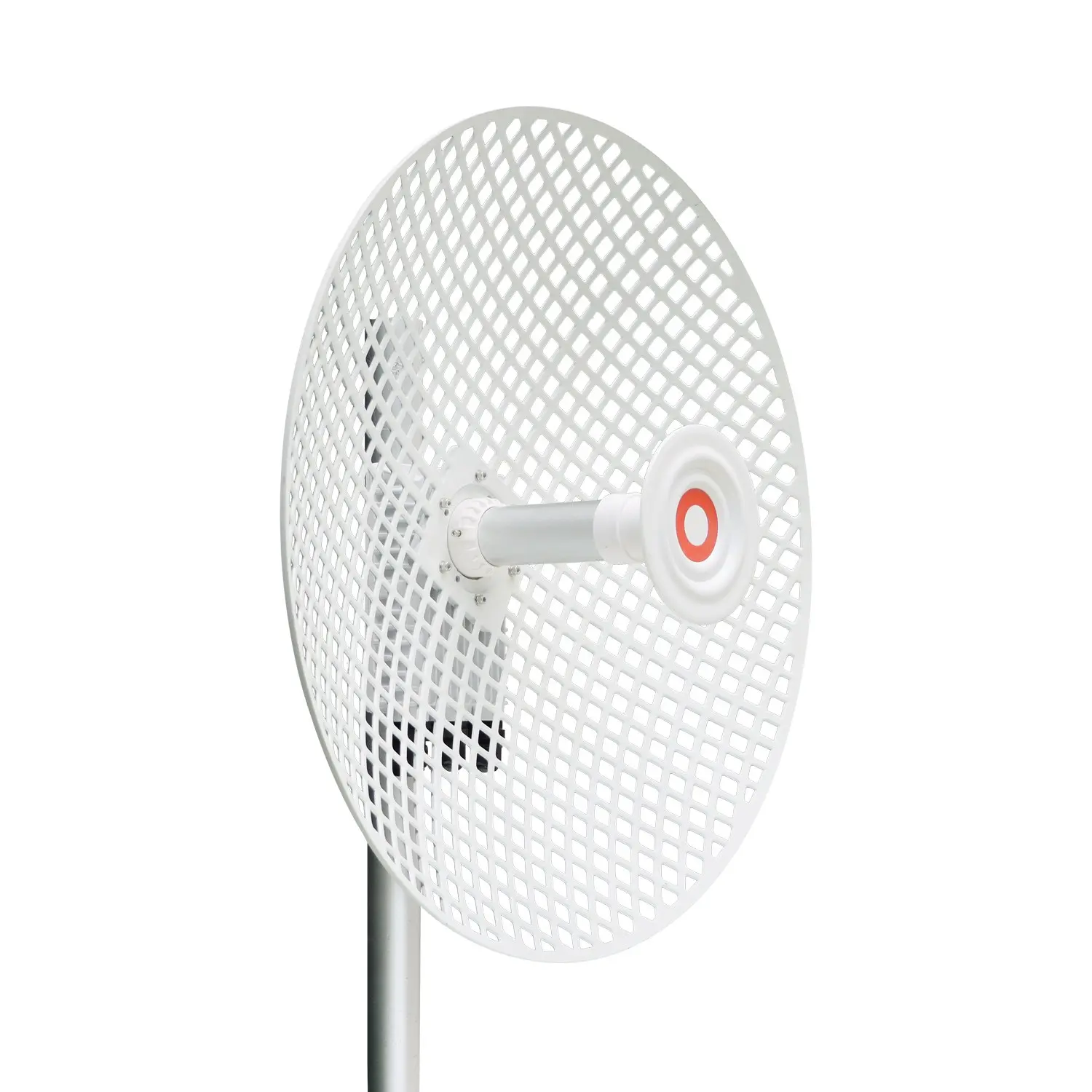
Photography pending verification
Heavy-Duty Roof Mount Kit for Outdoor Antennas
ROOF-MOUNT-KIT
Outdoor Roof / Pole Mount Kit · Outdoor APs, wireless bridges, antennas · Yes — sloped roofs and walls
Related Articles
In-depth guides and case studies relevant to this deployment.
Buying Guide
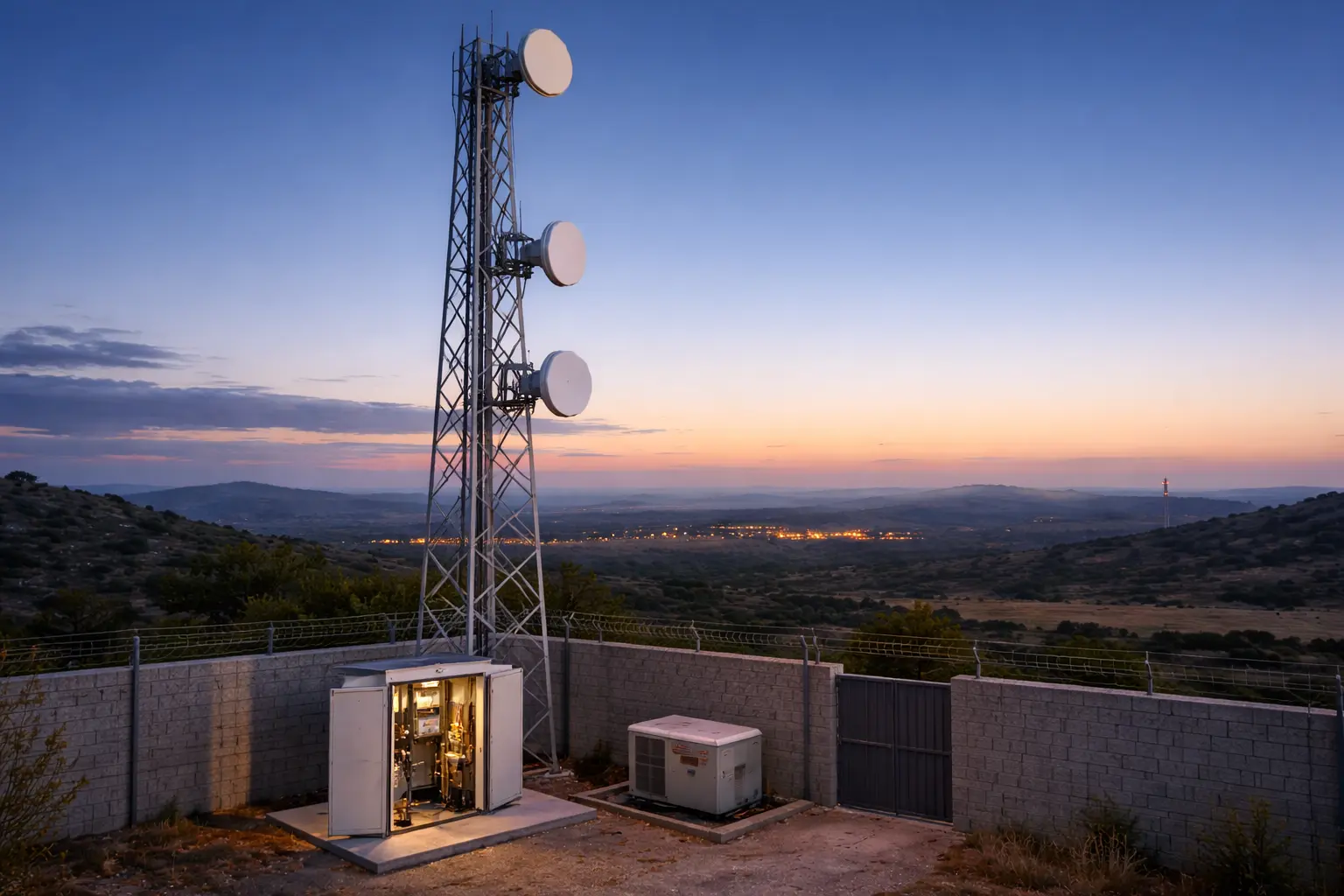
How Far Can a Wireless Bridge Reach? (Honestly)
A 40km @ 1Gbps datasheet claim quietly assumes two 37m towers and a perfectly clear path. Real distance tiers from 1km to 40km — and what each one costs.
Read Article →
Buying Guide
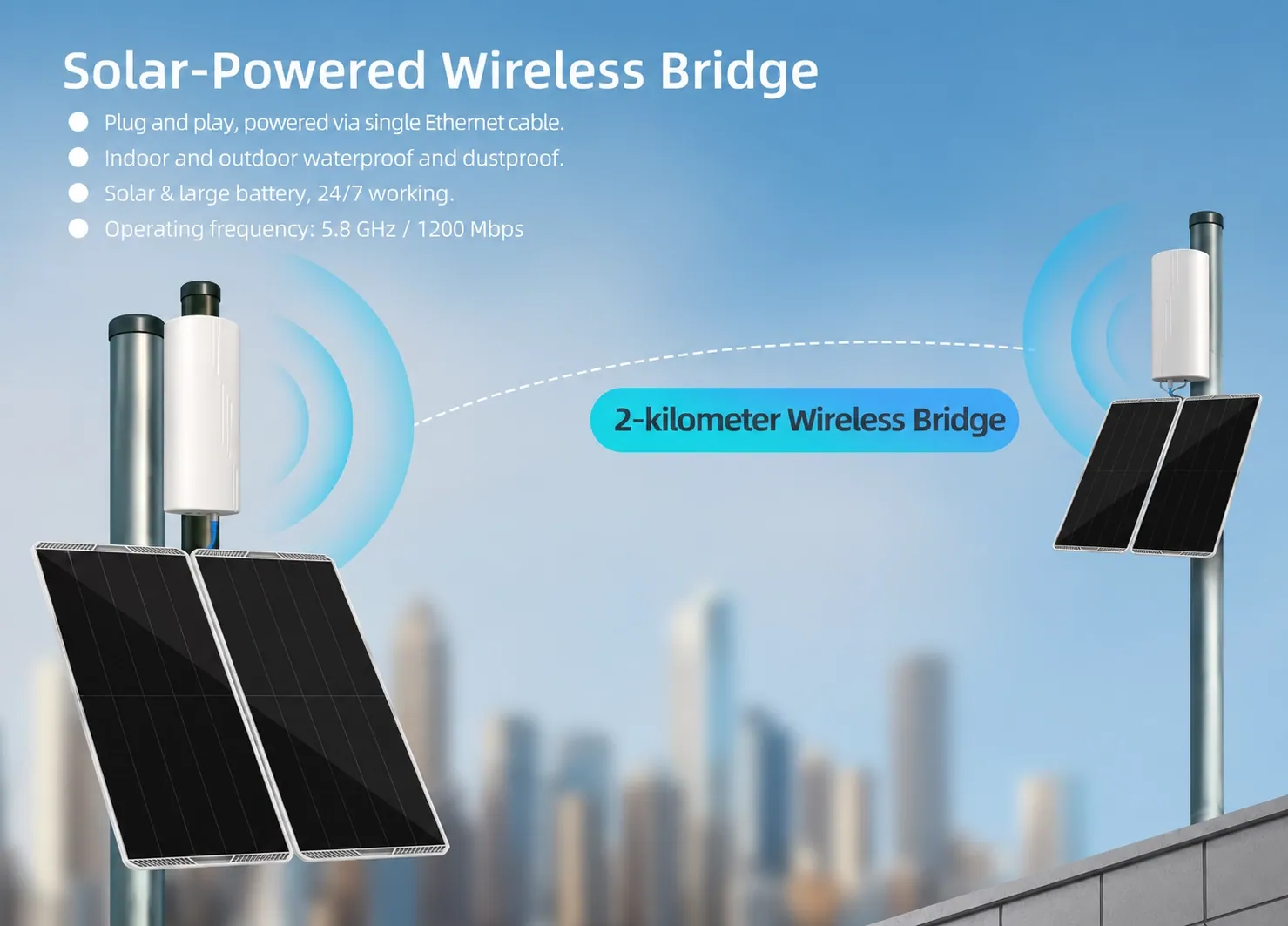
Point to Point Wireless Bridge Outdoor with Solar Panel
No grid power at your remote site? A point to point wireless bridge outdoor with solar panel runs 24/7 — no trenching, no electric bill. Sizing tables inside.
Read Article →
Comparison
Wi-Fi 6E Bridge: When to Upgrade from 5GHz
Spent $3,000 on 6GHz bridges with zero subscriber improvement? Here's when Wi-Fi 6E delivers real ROI — and when 5GHz is still the smarter choice.
Read Article →
Frequently Asked Questions
Practical answers for planning a deployment like this one.
What is the maximum reliable range for a rural wireless backhaul link?
Under clear line-of-sight conditions, the WB5axH6-35 with its 29 dBi dish antenna achieves reliable links at 35 km. For non-ideal conditions — partial obstruction, low Fresnel zone clearance, or interference — practical range is 15–25 km. The 30 KM bridge model extends this further with larger aperture antennas for demanding terrain.
Can these bridges work in mountainous terrain where there is no line of sight?
Long-range wireless links require line-of-sight or near-line-of-sight between endpoints. In mountainous terrain, this is solved by deploying relay nodes at ridge lines or high points that have line-of-sight to both the backbone tower and the next relay or subscriber area. MossLink provides consultation on relay chain planning for complex terrain.
How do you power wireless bridge equipment at remote tower sites without grid power?
MossLink wireless bridges consume 8–15 W per unit, well within the capacity of small solar+battery systems. A typical 80 W solar panel with 100 Ah battery provides reliable power for two bridge units through 3–4 consecutive cloudy days. We can advise on solar sizing for specific deployment latitudes and seasonal conditions.
Is OEM/ODM customization available for rural broadband programs?
Yes. Government programs and NGOs requiring private-label equipment for regional branding can order OEM-customized hardware with custom logos, firmware defaults, and packaging. Contact us for program pricing and lead times.
Interested in This Solution?
Let our team design a customized rural connectivity networking solution for your project. Get expert guidance and factory-direct pricing.