Surveillance
Outdoor CCTV Wireless Backhaul Solution
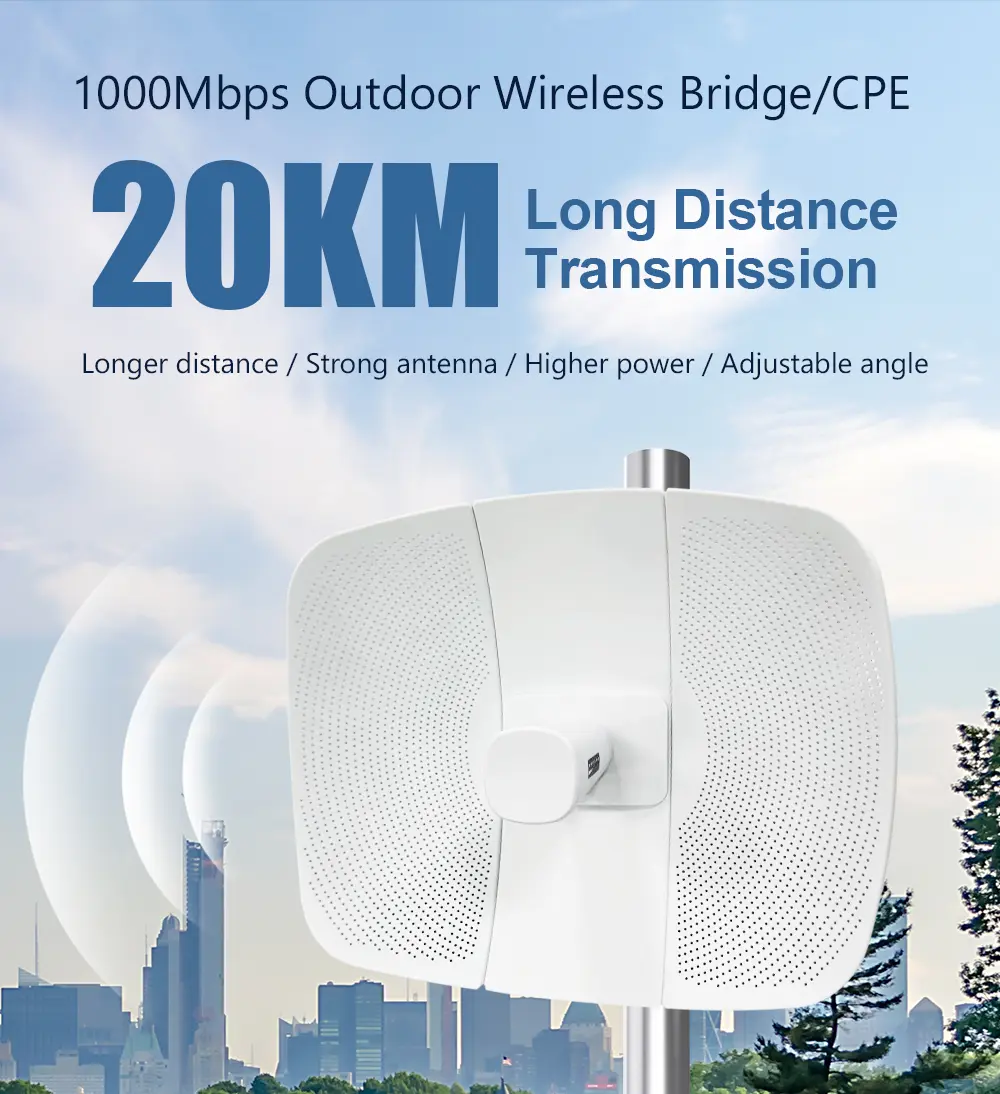
Outdoor CCTV deployment using wireless bridges and PoE switches to backhaul IP camera video 1-20km without cable runs — for parking lots, perimeters, farms, and construction sites
Site-specific topology · Bill of materials · OEM/ODM options
Network Architecture
Reference Topology
The Challenge
Security teams need cameras in difficult-to-reach outdoor locations: parking lot perimeters, remote gates, building rooftops, and fence lines. Traditional wired installations require long cable runs, ground trenching, and conduit — driving up project costs and timelines.
Environmental factors add complexity: equipment must withstand rain, dust, extreme heat, and freezing temperatures year-round.
Our Approach
MossLink replaces long cable runs with wireless bridge links:
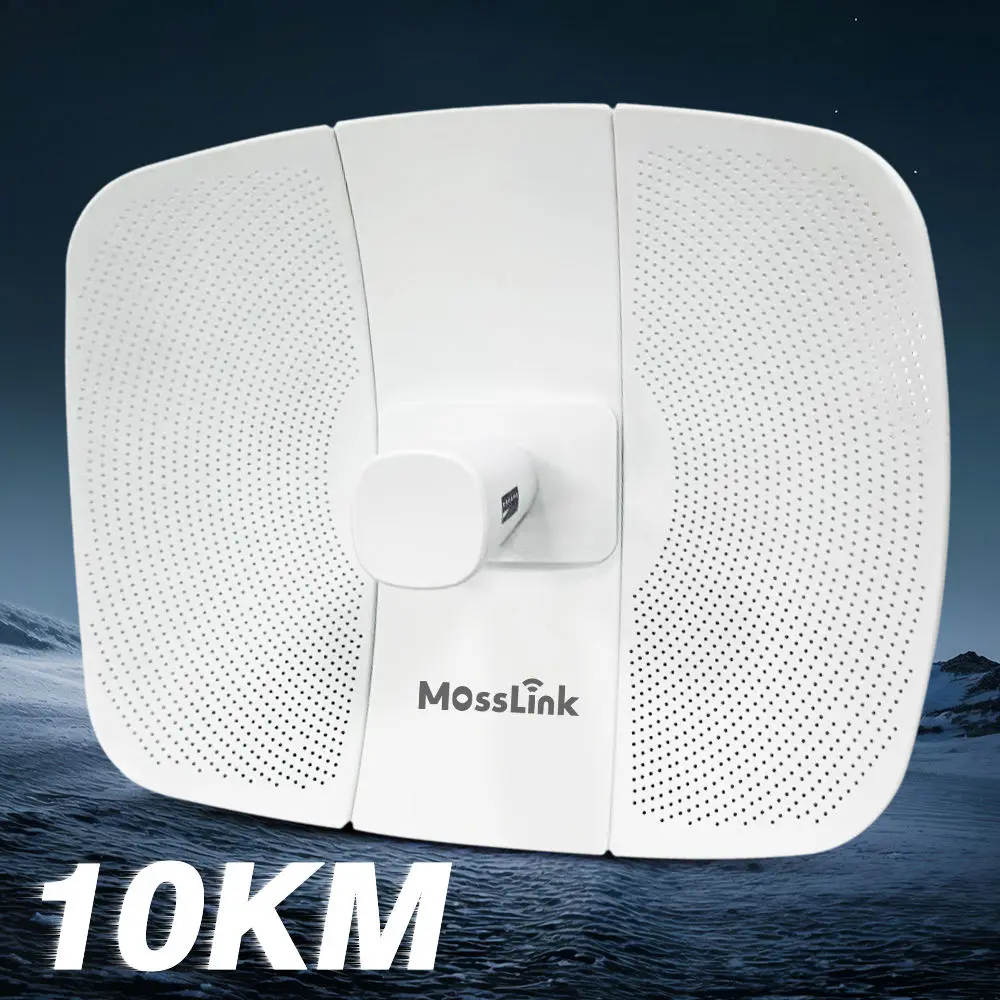
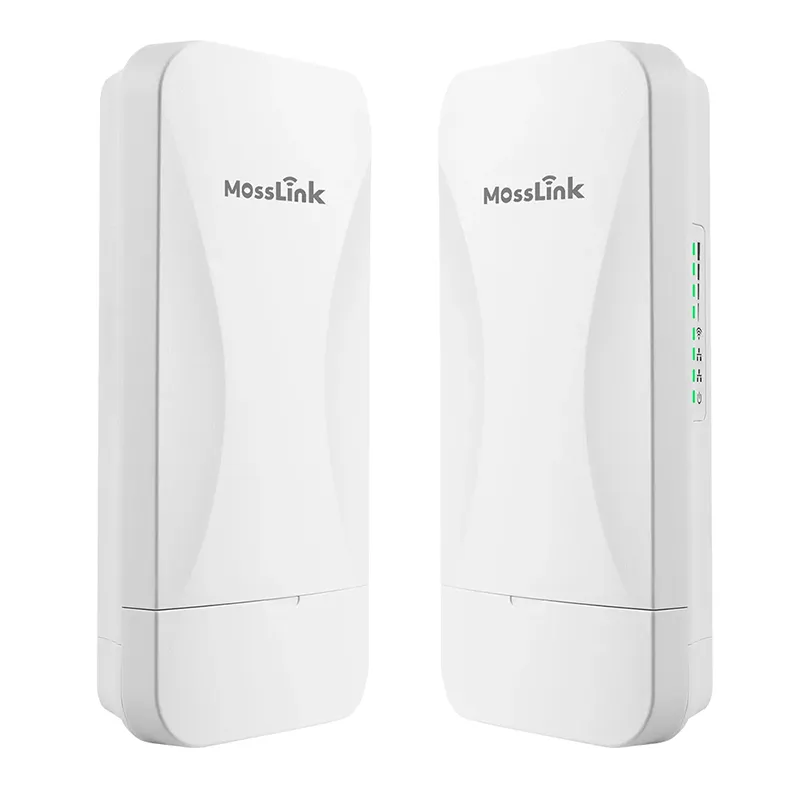
Long-Range Links (500 m – 5 km): WB610H and WB730 point-to-point bridges connect remote camera clusters to the main network at up to 5 km and 900 Mbps with line of sight. The WB610H carries PoE in and out at both ends, so the remote unit powers the camera it is backhauling.
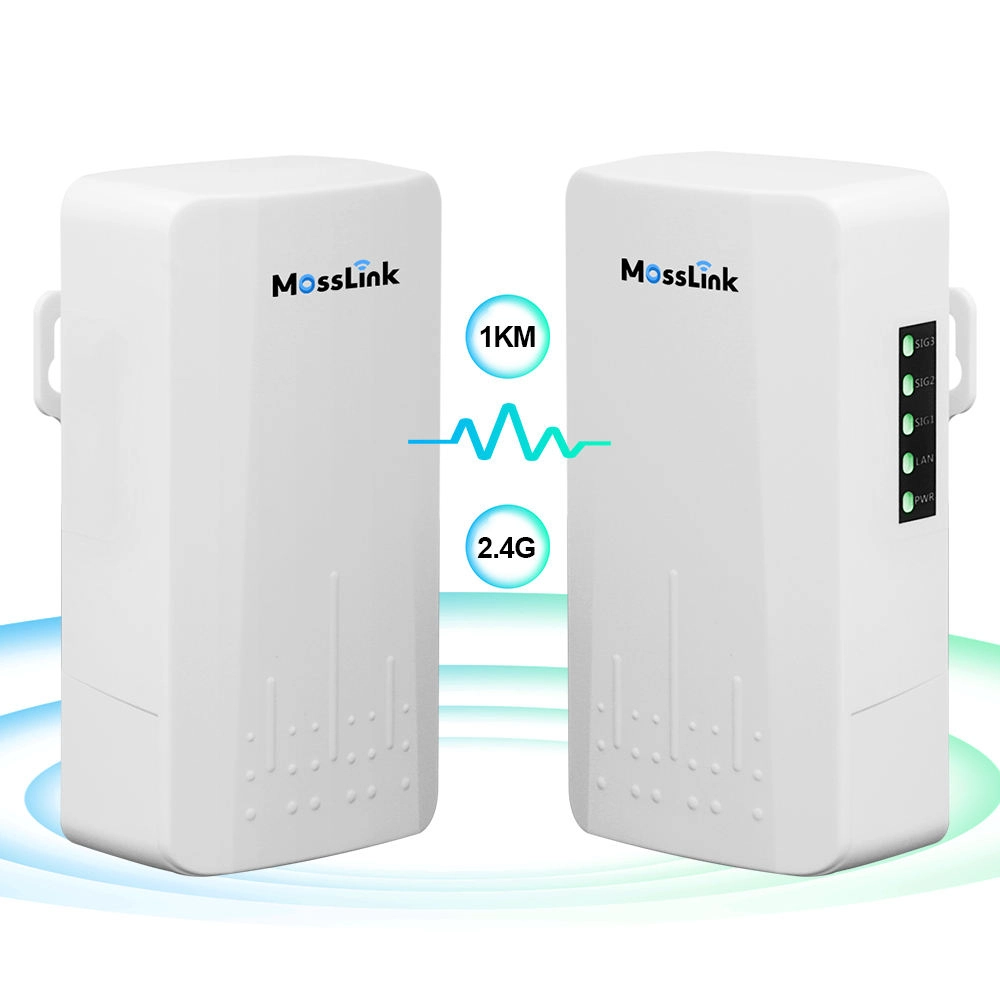
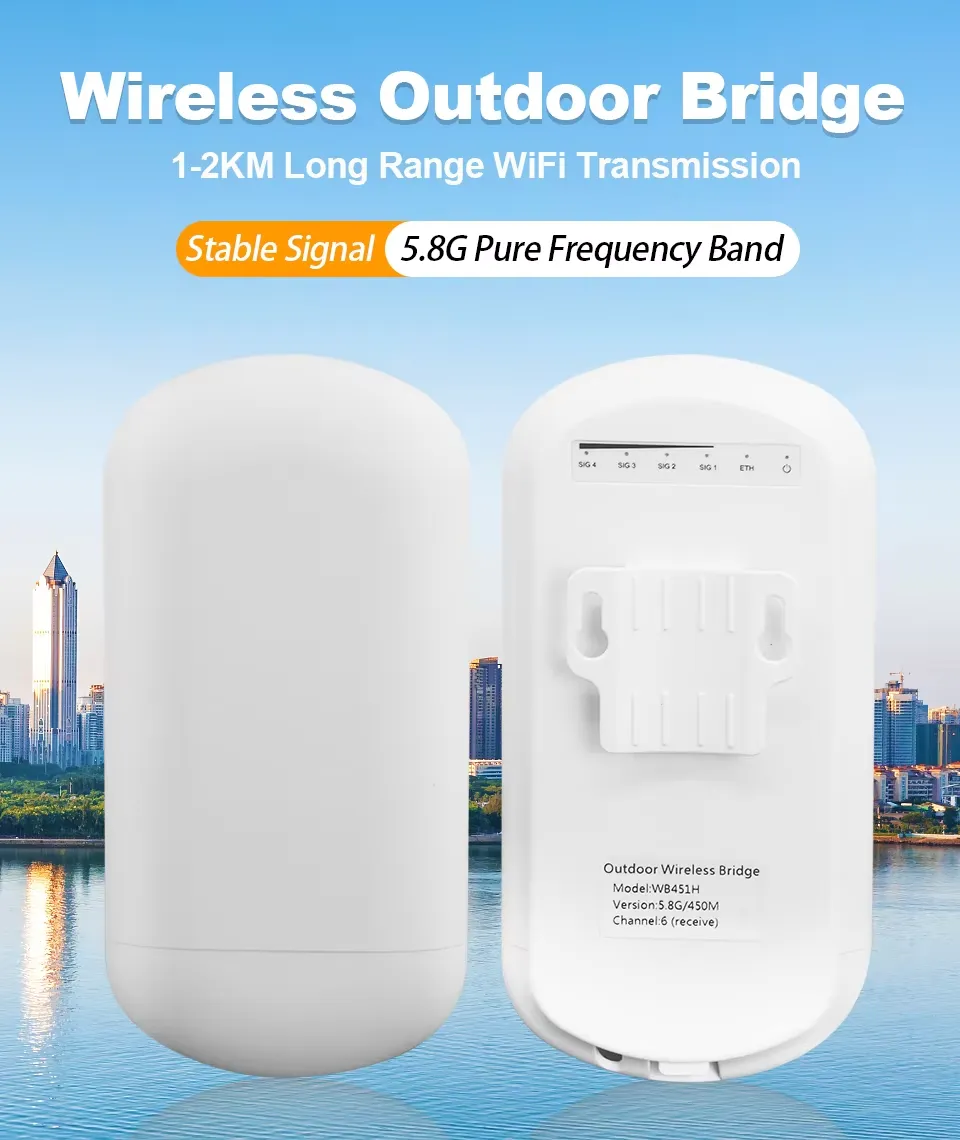
Short-Range and Elevator Links: The WB2F01 is the compact option — 2.4 GHz, 300 Mbps, twin built-in 6 dBi omni antennas and up to 1.2 km, IP65. The omnidirectional pattern is what makes it work in a lift shaft, where a directional panel would lose the link every time the car moves. For links between 1 and 2 km with a camera to power at the far end, the WB451H adds PoE output at 450 Mbps.
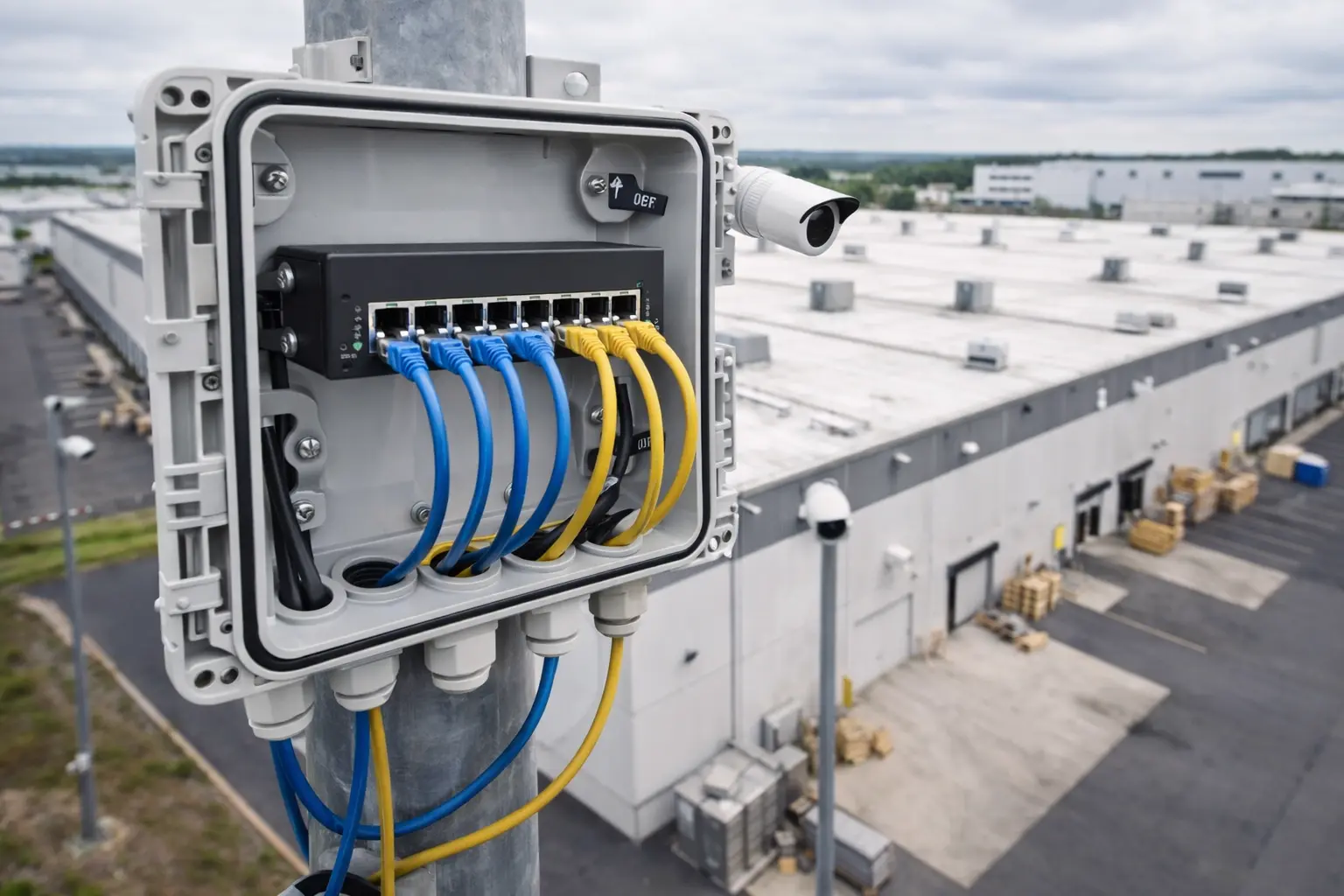
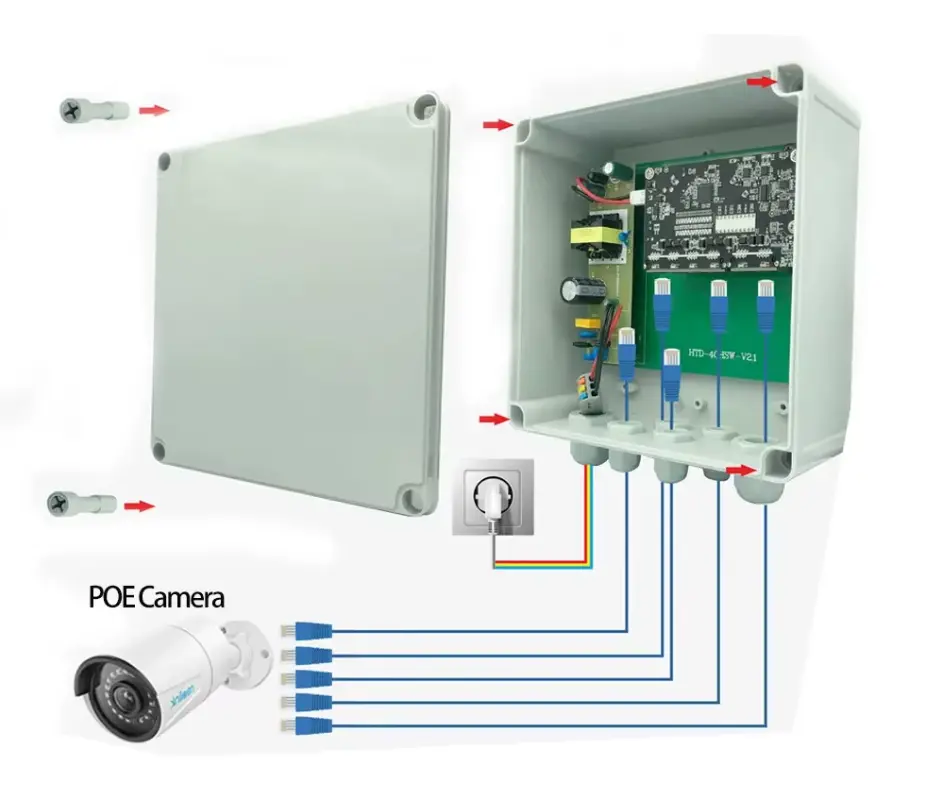
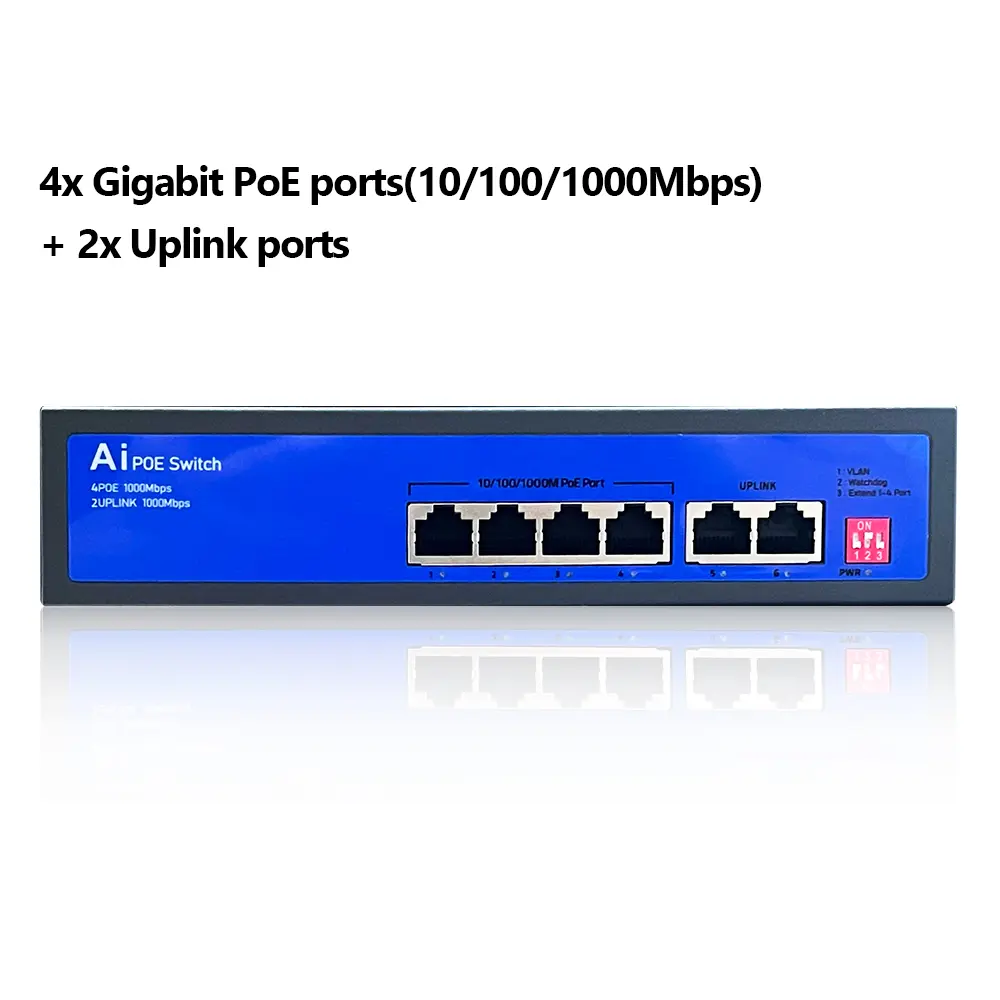
PoE Infrastructure: S402E and S802E AI PoE switches at each camera cluster power multiple cameras and the bridge unit from a single source, with watchdog port reboot for cameras that stop responding. Outdoors, the S402E-Outdoor does the same in an IP65 housing. Traffic isolation between surveillance and other services is done upstream on the gateway — see the PoE switch for CCTV solution for budget sizing.
Architecture Example
A typical parking lot deployment:
- S802E PoE switch in the server room powers the first bridge
- WB610H bridge pair links the server room to a remote pole
- S402E-Outdoor at the remote pole powers 4–8 IP cameras
- All video traffic is tagged on a dedicated surveillance VLAN
- NVR in the server room records all feeds over the bridge link
Bandwidth Planning for Video Surveillance
Camera resolution directly determines bridge throughput requirements. Plan your bridge links with these baselines:
- 1080p H.265 cameras: 4-8 Mbps per camera
- 4K (8MP) H.265 cameras: 12-20 Mbps per camera
- PTZ cameras with continuous recording: 15-25 Mbps per camera
A single MossLink WB630 bridge (900 Mbps throughput) comfortably handles 8-12 HD cameras or 4-6 4K cameras on one link. For larger clusters, the WB5AXH6-35 (2400 Mbps) supports 20+ cameras with headroom for NVR remote access and configuration traffic.
Always reserve 30% bandwidth margin for peak bitrate spikes during motion events, IR switching, and firmware update pushes.
PoE Switch Selection for Outdoor Camera Clusters
The PoE switch at each camera cluster is the power and data hub for the entire remote site. Key selection criteria:
PoE Budget: Each camera draws 7-15W typical, 25W peak with heaters or IR. A 4-port switch with 60W budget powers 4 standard cameras. An 8-port switch with 120W budget handles 8 cameras plus the bridge unit.
Extend Mode: MossLink S402E switches support 250-meter Extend Mode at 10 Mbps — useful for cameras placed beyond standard 100m Ethernet reach without adding a second switch.
AI Watchdog: The switch pings each connected camera at configurable intervals. If a camera stops responding, the switch automatically power-cycles that port. This eliminates truck rolls for frozen cameras in remote locations.
Outdoor Enclosure: The S402E-Outdoor model ships in an IP65-rated housing for pole or wall mounting at the camera cluster — no need for a separate weatherproof junction box.
Why MossLink for Surveillance Projects
Security integrators and CCTV distributors choose MossLink for several reasons:
- Bridge + PoE switch bundles ship as tested, pre-configured kits ready for field installation
- Built-in PoE output on select bridge models (WB451H) powers one camera directly from the bridge — no switch needed for single-camera locations
- All outdoor equipment is IP65/IP67 rated and tested for -30°C to +65°C continuous operation
- OEM branding: your logo on the bridge, switch, and packaging for project bids and resale
- Factory-direct pricing from Shenzhen with 15-30 day lead times for 100+ unit orders
Results
Wireless bridge-based surveillance networks eliminate the majority of outdoor cabling costs while providing reliable, high-bandwidth video backhaul. The modular design means additional camera locations can be added by deploying another bridge pair — no trenching required.
Frequently Asked Questions
How many cameras can one wireless bridge support? A 900 Mbps bridge (like the WB630) handles 8-12 HD cameras or 4-6 4K cameras. For larger clusters, the WB5AXH6-35 (2400 Mbps) supports 20+ cameras. Plan for 30% bandwidth headroom above aggregate camera bitrate.
Can I use wireless bridges for elevator CCTV? Yes. MossLink 2.4 GHz bridges (WB2F01) are specifically designed for elevator shaft installations where wall penetration matters more than speed. They deliver 300 Mbps — sufficient for 2-4 elevator cameras — with auto-pairing and 12V PoE.
What happens if a camera freezes on a remote PoE switch? MossLink AI PoE switches (S402E, S802E) detect unresponsive cameras via ICMP ping and automatically power-cycle the affected port. The camera reboots within 30-60 seconds without a site visit.
How far can a wireless bridge reach for CCTV backhaul? Standard panel bridges reach 3-5 km with clear line of sight. High-gain dish models (WB5ACDish-Pro, WB5AXH6-35) reach 15-30 km. Most surveillance projects fall within 1-5 km where standard bridges perform excellently.
Related Solutions
- PoE Switches for CCTV — powering the cameras at each end of the link
- PtP & PtMP Wireless Bridge Solutions — choosing between a single link and a multi-site star
- Outdoor Access Point Solution — when the same poles also need to broadcast Wi-Fi
Products Used in This Solution
Related Articles
In-depth guides and case studies relevant to this deployment.
Buying Guide
How to Set Up a Wireless Bridge (Pairing to Internet)
The listing said plug and play — but nothing's playing. A step-by-step wireless bridge setup walkthrough for first-time users, from unboxing to internet.
Read Article →

Buying Guide
How to Extend Internet to Your Garage Without Trenching
Garage 80 m away, trenching quotes hit $3,000+? A $120 wireless bridge pair delivers 300 Mbps in 30 minutes — step-by-step install guide inside.
Read Article →
Buying Guide
Point to Point Wireless Bridge Outdoor with Solar Panel
No grid power at your remote site? A point to point wireless bridge outdoor with solar panel runs 24/7 — no trenching, no electric bill. Sizing tables inside.
Read Article →
Interested in This Solution?
Let our team design a customized surveillance networking solution for your project. Get expert guidance and factory-direct pricing.