Your distributors have started asking the question you knew was coming: “When can you supply Wi-Fi 7?” Client devices with 802.11be are shipping in volume, enterprise refresh cycles are hitting their three-year mark, and the first competitor in your market already lists a Wi-Fi 7 access point — whether or not they can actually deliver it.
That last part is the trap. Right now, the gap between listing a Wi-Fi 7 AP and mass-producing one is wide. Plenty of suppliers quote from renders and reference designs that have never seen an SMT line. This guide covers how to tell the difference — and what a realistic Wi-Fi 7 OEM project looks like in 2026.
Why are OEM buyers adding Wi-Fi 7 to their lineups now?
Because the demand side finally caught up. Wi-Fi 7 brings Multi-Link Operation, 4096-QAM, and up to 320MHz channels — the practical result is higher throughput and noticeably lower latency in dense deployments. (If you are still weighing whether your market needs it at all, our Wi-Fi 6 vs Wi-Fi 7 enterprise comparison covers that decision in depth — this article assumes you have buyers asking for it.)
For brand owners and distributors, the commercial logic is simpler than the RF engineering: a Wi-Fi 7 SKU at the top of your catalog protects your Wi-Fi 6 volume from looking dated, even while Wi-Fi 6 keeps carrying most of the shipments.
What should you verify before choosing a manufacturer?
Six checks separate real Wi-Fi 7 production from a photoshopped datasheet:
| Check | What to ask | Red flag |
|---|---|---|
| Shipping hardware today | ”Send a production sample this week” | Only renders, or 8-week “sample” lead times |
| Chipset platform | Which SoC + radio combination, and is the BSP mature? | Vague answers, or a platform with no shipping products |
| Production line | SMT in-house? What percentage of units are tested? | Outsourced assembly with no aging test |
| Certifications | CE, FCC, RoHS in hand for the actual model | ”Certification in progress” |
| Warranty | Who covers field failures, and for how long | 1-year warranty on outdoor hardware |
| Customization tiers | Clear MOQ per customization level, in writing | ”Everything is possible” with no numbers |
The chipset question matters more on Wi-Fi 7 than it did on Wi-Fi 6. The 802.11be silicon ecosystem is younger, and a manufacturer’s board support package (BSP) maturity decides whether your firmware requests take two weeks or two quarters. Ask which platform the product runs and how long it has been in production — a Wi-Fi 7 access point manufacturing partner with real production history will answer in model numbers, not adjectives.
What does Wi-Fi 7 OEM customization actually include?
Customization is tiered by how deep the change goes, and honest MOQs follow the engineering cost:
| Tier | What you get | MOQ |
|---|---|---|
| Logo & packaging (OEM) | Your logo on the enclosure, branded box, labels, user manual — zero manufacturer branding | From 100 units |
| Custom firmware | Custom web UI and boot screen, default configuration, regional presets | From 500 units |
| Custom hardware (ODM) | Enclosure and antenna modifications, port changes, PCB-level work | From 1,000 units |
One distinction that saves a lot of back-and-forth: cloud management as a feature and cloud white-labeling are different requests. Cloud and app management for centralized multi-site control is a standard capability on cloud-enabled models. Rebranding that entire cloud platform under your own name, however, is a separately scoped OEM program — selected models, a one-time deployment setup, and committed volume. Suppliers who promise a free white-label cloud on any SKU at any quantity are quoting something they have not built.
For router lines the same tiering applies — see our white-label Wi-Fi router manufacturing capability for the full-stack version of this offer.
What does a production-ready Wi-Fi 7 AP look like?
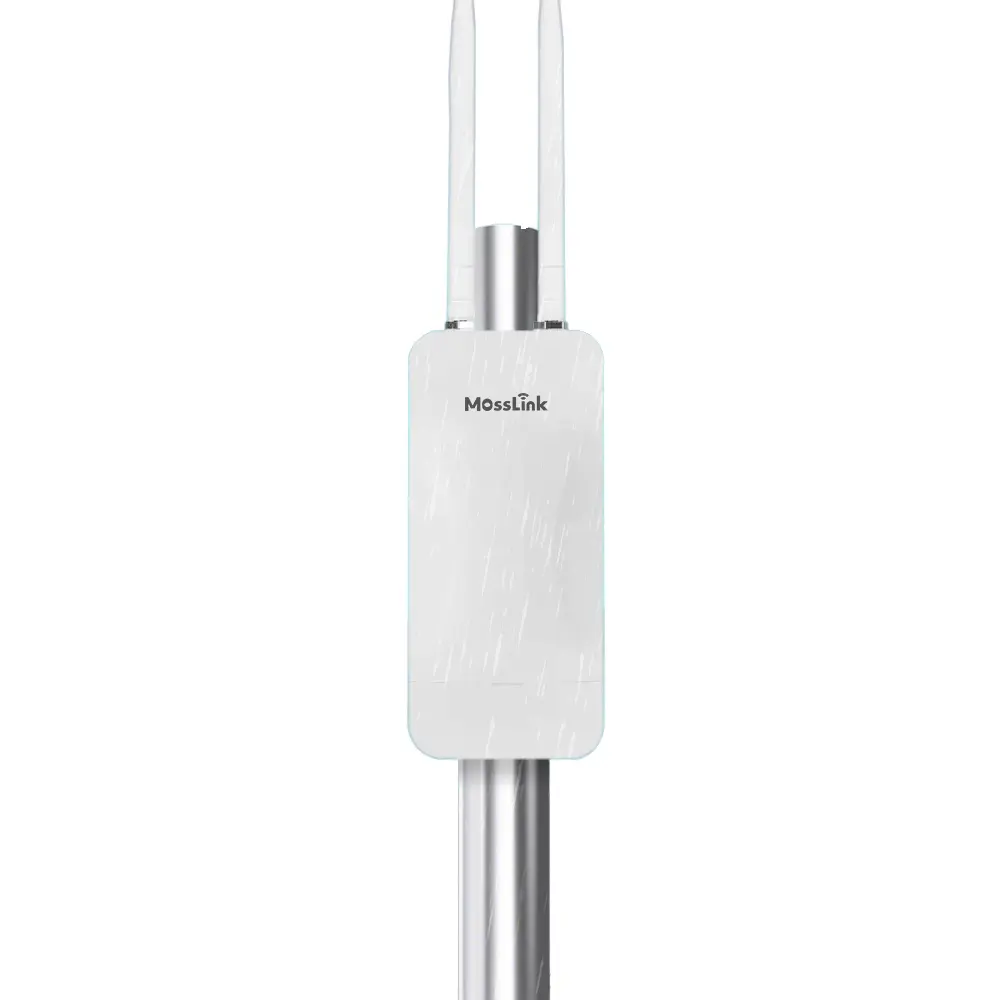
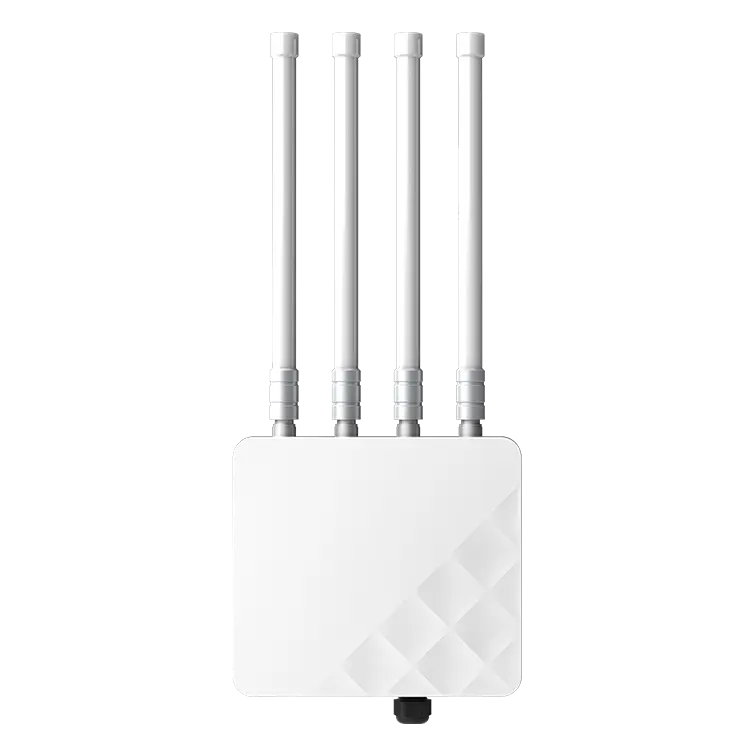
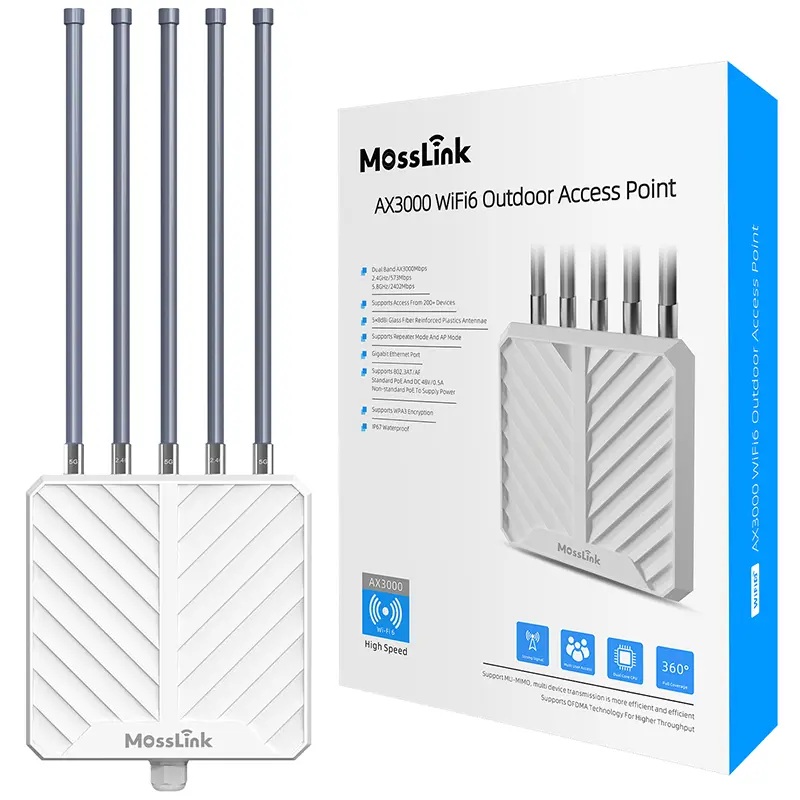
As a concrete reference, here is the platform we ship today — the APH4-BE3600 outdoor Wi-Fi 7 access point:
- Wi-Fi 7 (802.11be) dual-band 3600Mbps — 688Mbps on 2.4GHz + 2882Mbps on 5GHz
- 2.5Gbps WAN port with PoE IN — the detail that separates serious Wi-Fi 7 designs from rebadged Wi-Fi 6 boards; a gigabit uplink would bottleneck the radio
- 128 concurrent clients, 80m coverage radius
- IP65 UV-resistant enclosure, -30°C to +55°C — built for hotel courtyards, campus perimeters, and dense outdoor deployments
- 802.3at PoE or DC 12V, under 20W draw
- CE / FCC / RoHS certified, 5-year warranty
Use it as a checklist even if you source elsewhere: multi-gig uplink, real client capacity numbers, outdoor rating with a stated temperature range, and certification for the actual shipping model.
Should your product line start with Wi-Fi 7 or stay on Wi-Fi 6?
Both — and the split matters more than the headline standard. Wi-Fi 7 earns its premium in dense, high-throughput deployments and future-proofed enterprise bids. For price-sensitive volume markets, Wi-Fi 6 remains the workhorse: mature silicon, lower BOM, and models like the APH6-AX5400 and APH6-AX3000 cover outdoor enterprise deployments at a fraction of the cost. The full trade-off analysis lives in our Wi-Fi 6 vs Wi-Fi 7 comparison — the short version is that a two-tier catalog beats betting on either standard alone.
How does a Wi-Fi 7 OEM project actually run?
A realistic sequence, based on how our OEM projects flow (timelines are representative — confirm against your specification):
- Sample evaluation — production units in your hands within 1–2 weeks, tested in your market’s conditions
- Logo and packaging run — from 100 units, your brand on enclosure, box, and manual
- Firmware customization — from 500 units, custom web UI and default configurations for your market
- Hardware ODM — from 1,000 units when you need enclosure, antenna, or port changes
Behind the sequence, the production facts that matter: 100% SMT inline testing, 24-hour aging tests before packing, and a 5-year warranty on the result. Those three numbers are worth more than any spec-sheet superlative — they decide your RMA rate two years from now.
If you are evaluating suppliers for a Wi-Fi 7 line right now, see our OEM/ODM manufacturing capabilities for the full process, or go straight to hardware: request an APH4-BE3600 sample. For volume quotes, contact our team or message an engineer on WhatsApp — tell us your target market and volume, and we will map the customization tier that fits.
Featured in this guide
Frequently Asked Questions
Practical answers for planning a similar network.
What is the MOQ for a custom Wi-Fi 7 access point?
How much does a Wi-Fi 7 access point cost at OEM volume?
Can the cloud management platform be branded with our logo?
Who owns the certifications for an OEM production run?
Can we start with samples before committing to OEM quantities?
Deploy with confidence
See how MossLink builds Campus Wi-Fi Network Solution & Access Points end-to-end
Network architecture, products used, and real-world results in one place.
Tags
Share