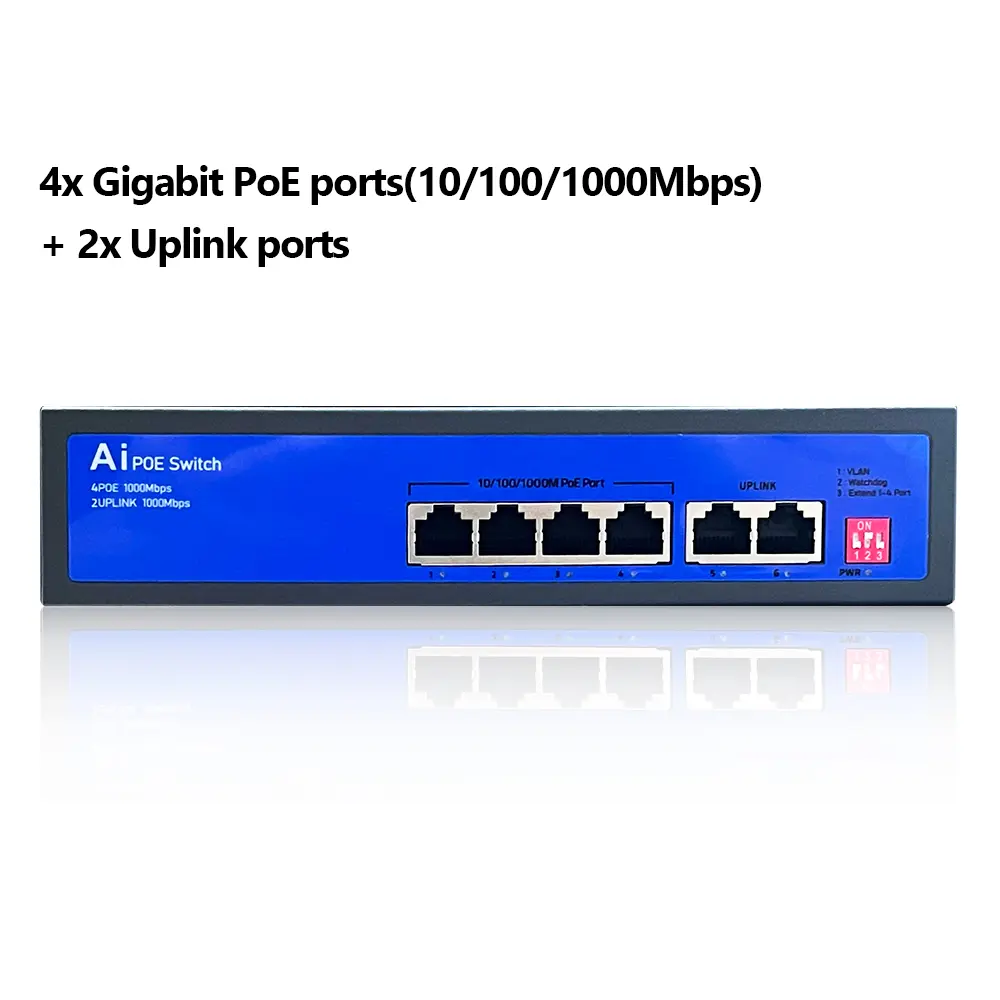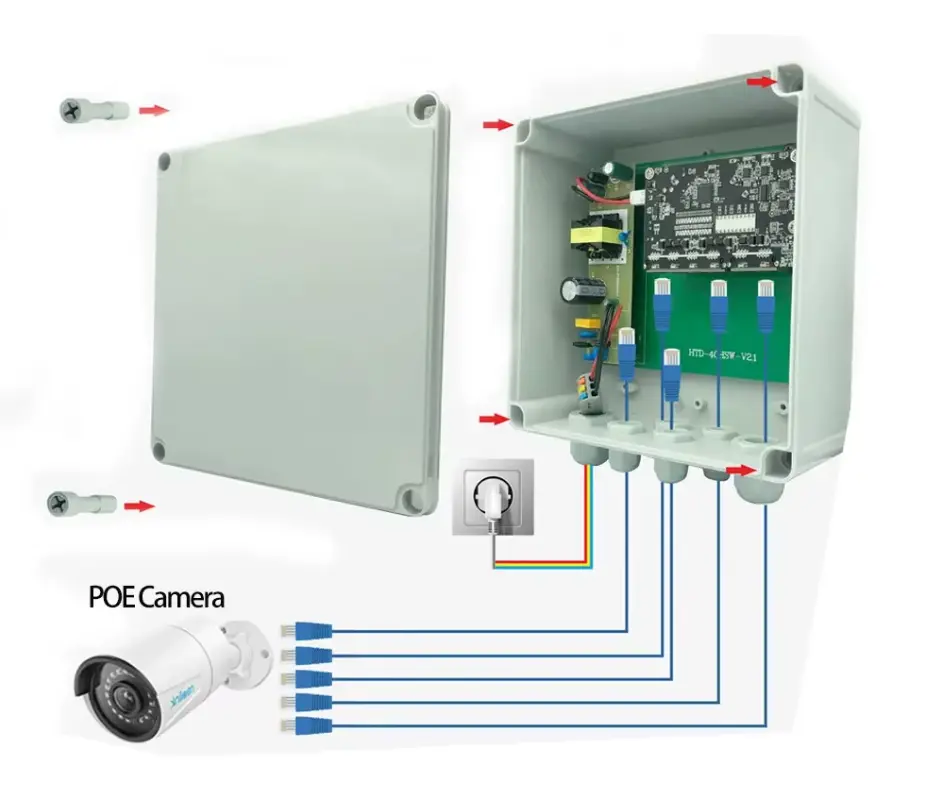
S402E-Outdoor 6-Port PoE Switch, IP65, 250m Extend
S402E-Outdoor
PoE-powered IP camera network for outdoor surveillance, parking lot coverage, perimeter security, and facility monitoring — eliminating separate power runs to each camera location
Site-specific topology · Bill of materials · OEM/ODM options
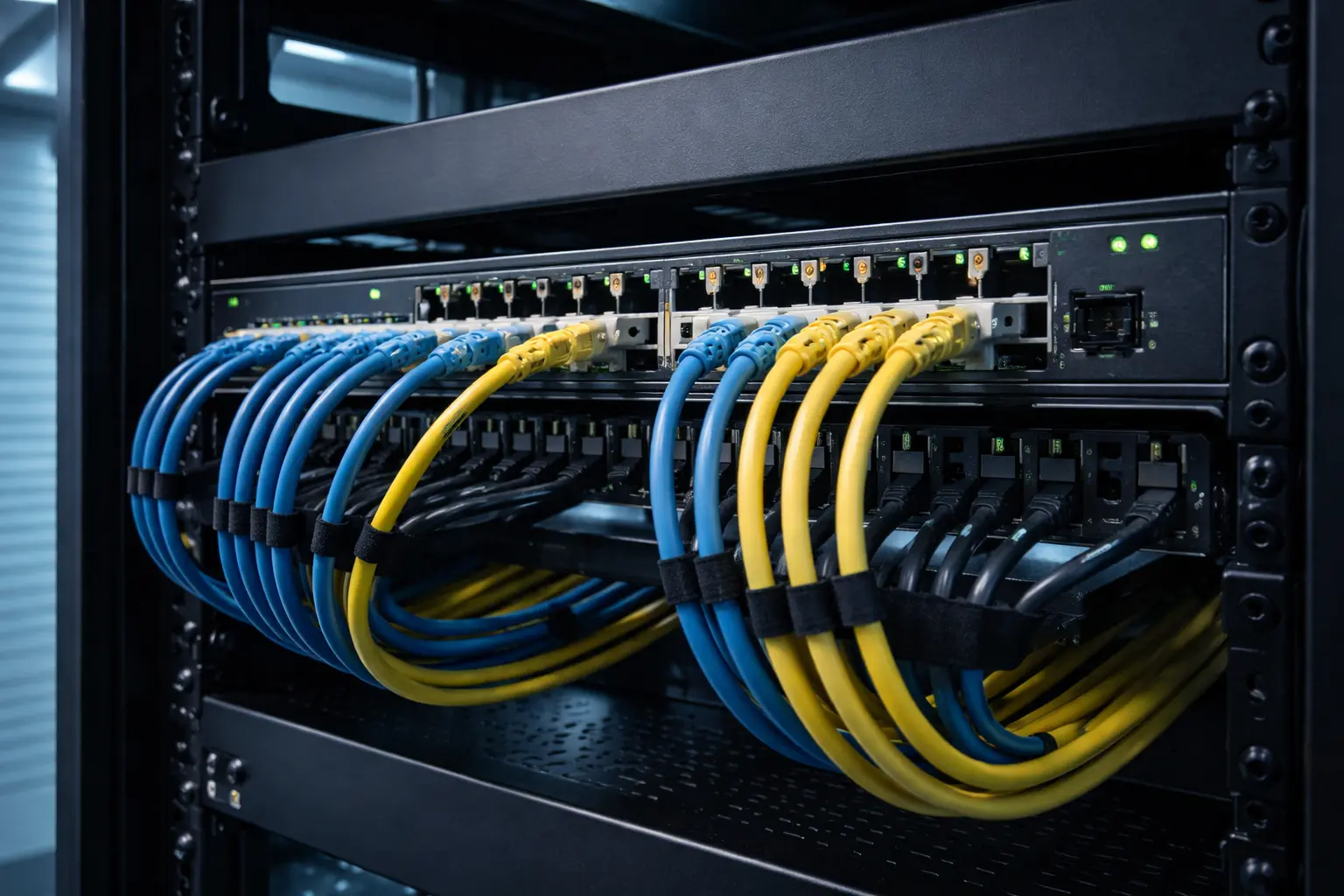
Reference Topology
Every IP camera in a surveillance network needs two things: network connectivity and electrical power. In a traditional installation, this means running two separate cables to each camera — Cat5e for data and an electrical circuit for power. At a typical installation site with 20–40 cameras spread across a building perimeter, parking lot, or facility campus, the cost of conduit, electrical wiring, outlets, and licensed electrician labor for separate power runs can easily double the total system cost.
The problem is compounded outdoors. Camera positions on poles, building corners, and fence lines are often far from electrical panels. Running conduit underground or through building walls adds further labor and material cost. And maintaining separate power circuits for cameras means managing both IT infrastructure and electrical systems — often across different teams and maintenance contracts.
System integrators serving the CCTV market need PoE switches that deliver sufficient wattage for modern cameras, survive outdoor mounting conditions, and are priced competitively for security project budgets.
MossLink’s PoE switch lineup eliminates the separate power run at every level of the surveillance network:
Compact Junction-Box Switches: The S402E is a 4-port PoE switch sized to mount inside a standard junction box or small enclosure at a camera cluster point. One uplink brings power and data from the core; four 802.3af/at ports at up to 30 W each, 60 W total, feed the surrounding cameras. Fanless IP30 metal, −20 °C to +55 °C.
Pole-Mount Outdoor Switches: The S402E-Outdoor puts the same idea in an IP65 waterproof housing for direct pole or wall mounting — 4 PoE ports plus 2 uplinks, 65 W total budget, −10 °C to +55 °C. It carries the AI watchdog, which detects an unresponsive camera and power-cycles that port automatically, and an extend mode that reaches 250 m at 10 Mbps when a camera sits past the usual 100 m Ethernet limit.
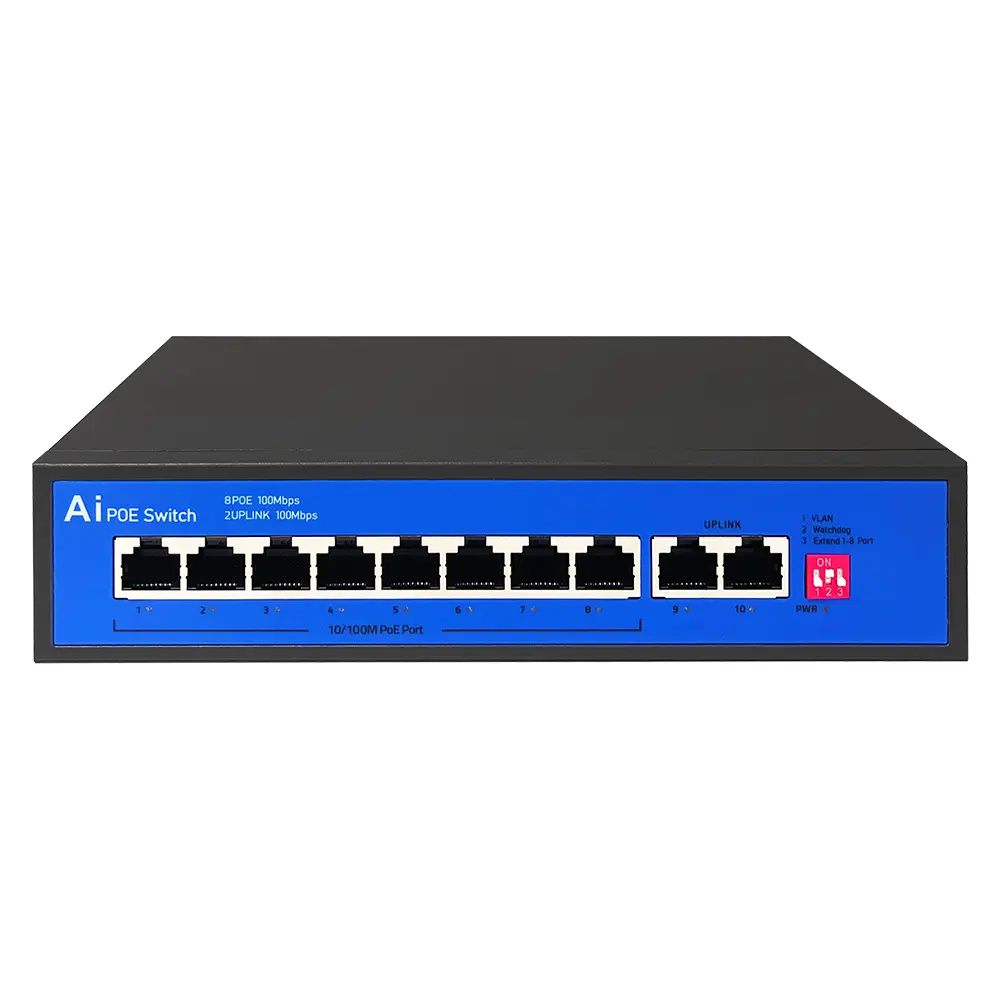
Indoor Aggregation, 100 M: The S802E is the 8-port workhorse for an NVR room or IDF closet — 96 W total budget, 4 kV surge protection, fanless IP30 metal, and 300 m extend on port 1. Its PoE ports are 10/100 Mbps, which is the right call for cameras and readers and the wrong call for a busy access point.
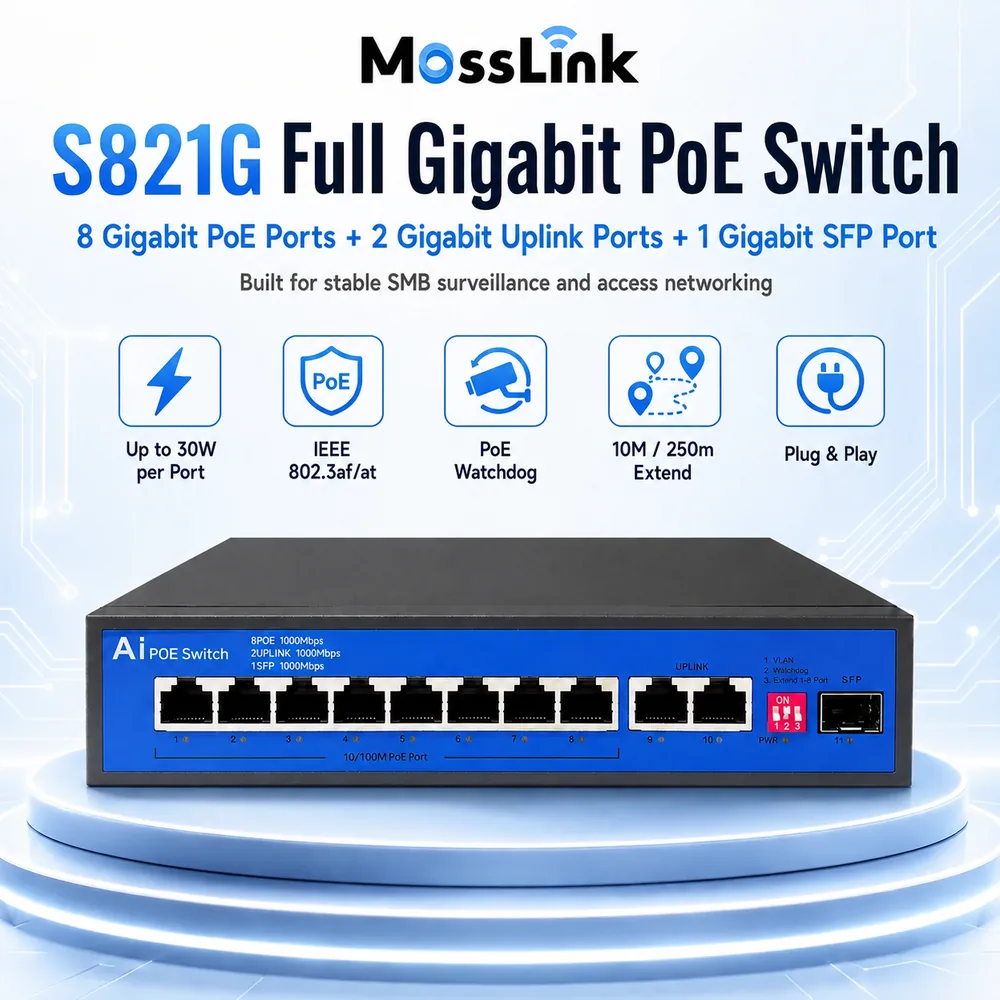
Indoor Aggregation, Gigabit: Where the camera feeds are high-resolution or the same switch also powers APs, step up to the gigabit family: S821G (8 PoE ports, 120 W), S1621G (16 ports, 300 W, 1U rack) and S2421G (24 ports, 400 W, 1U rack). All three add two gigabit uplinks plus a 1000 M SFP port, PoE watchdog per port, and 250 m extend mode.
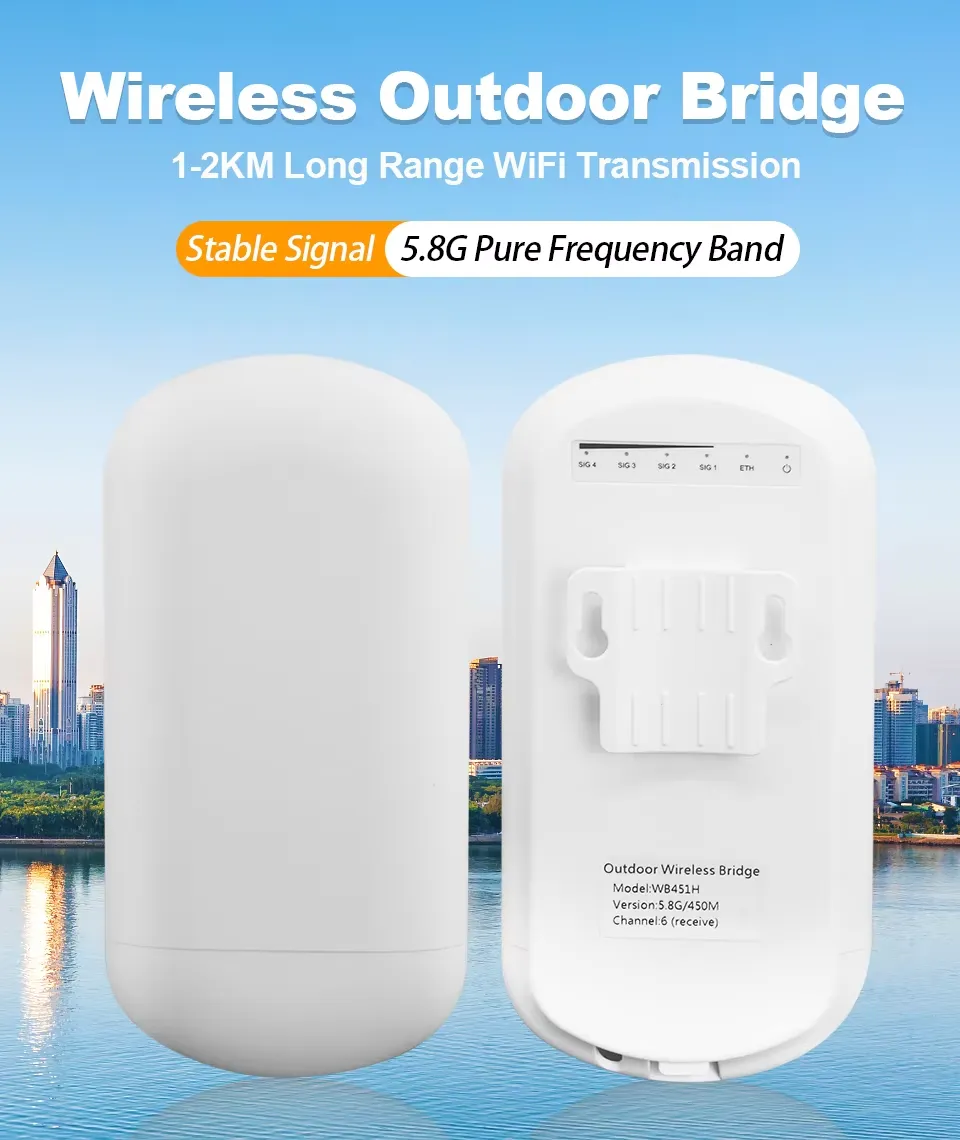
Where There Is No Cable Route: The WB451H wireless bridge covers 1–2 km at 450 Mbps and outputs PoE at the remote end, so it powers the camera it is backhauling — one device instead of a bridge plus an injector on the pole.
This is where CCTV projects go wrong most often. Per-port rating and total budget are different numbers, and only one of them limits your design.
A fixed IP camera typically draws 4–8 W; add IR illuminators and it climbs. A PTZ with a heater can pull 25 W or more, which is the full 802.3at allocation for one port. None of these switches support 802.3bt, so a PTZ requiring 60 W will not run from them — check the camera datasheet before you size the switch, not after.
Then count the total. Eight cameras at 8 W is 64 W, comfortably inside the S802E’s 96 W. Add two access points at 16 W each and you are at 96 W with zero headroom. Leave 20–30% margin, because a switch that browns out at night when the IR illuminators cut in produces the hardest fault to diagnose in surveillance work.
A typical 40-camera facility surveillance network:
For traffic isolation between the camera network and the office LAN, do the VLAN work on the gateway or a managed switch upstream — these AI PoE switches are unmanaged by design, which is what keeps them cheap and keeps a failed configuration from taking a site offline.
Security integrators using MossLink PoE switches report per-camera installation cost reductions of 40–60% compared to deployments requiring separate power runs. The watchdog port reboot feature reduces maintenance call-outs for frozen cameras by eliminating the most common reason for on-site visits. The IP65 outdoor model performs reliably through full seasonal cycles without housing failures.
MossLink supplies PoE switches factory-direct from Shenzhen, with OEM customization available for integrators and security brands. CE/FCC certification is standard on all models. Contact our sales team for volume pricing and project consultation.
In-depth guides and case studies relevant to this deployment.
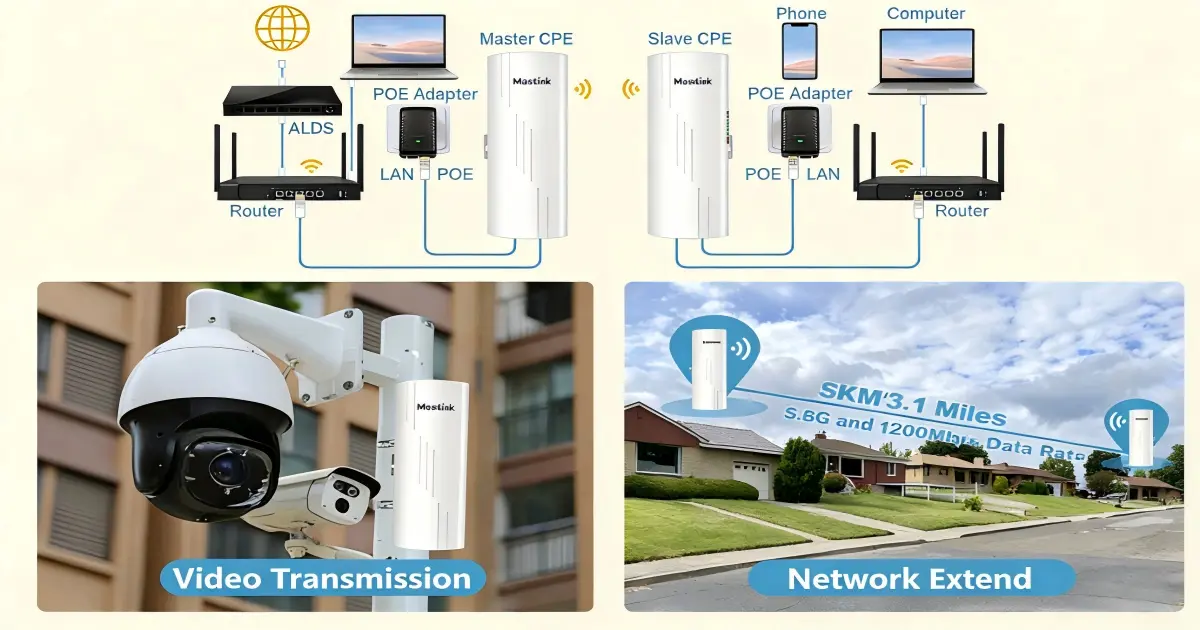
One PoE switch powers your bridge, cameras, and APs — or nothing boots. Match passive 24V vs 802.3af/at, size the watts, and spec a kit that works.
Read Article →

Forty units, forty consumer routers, constant interference. How property owners cover a whole apartment building from one managed WiFi network.
Read Article →
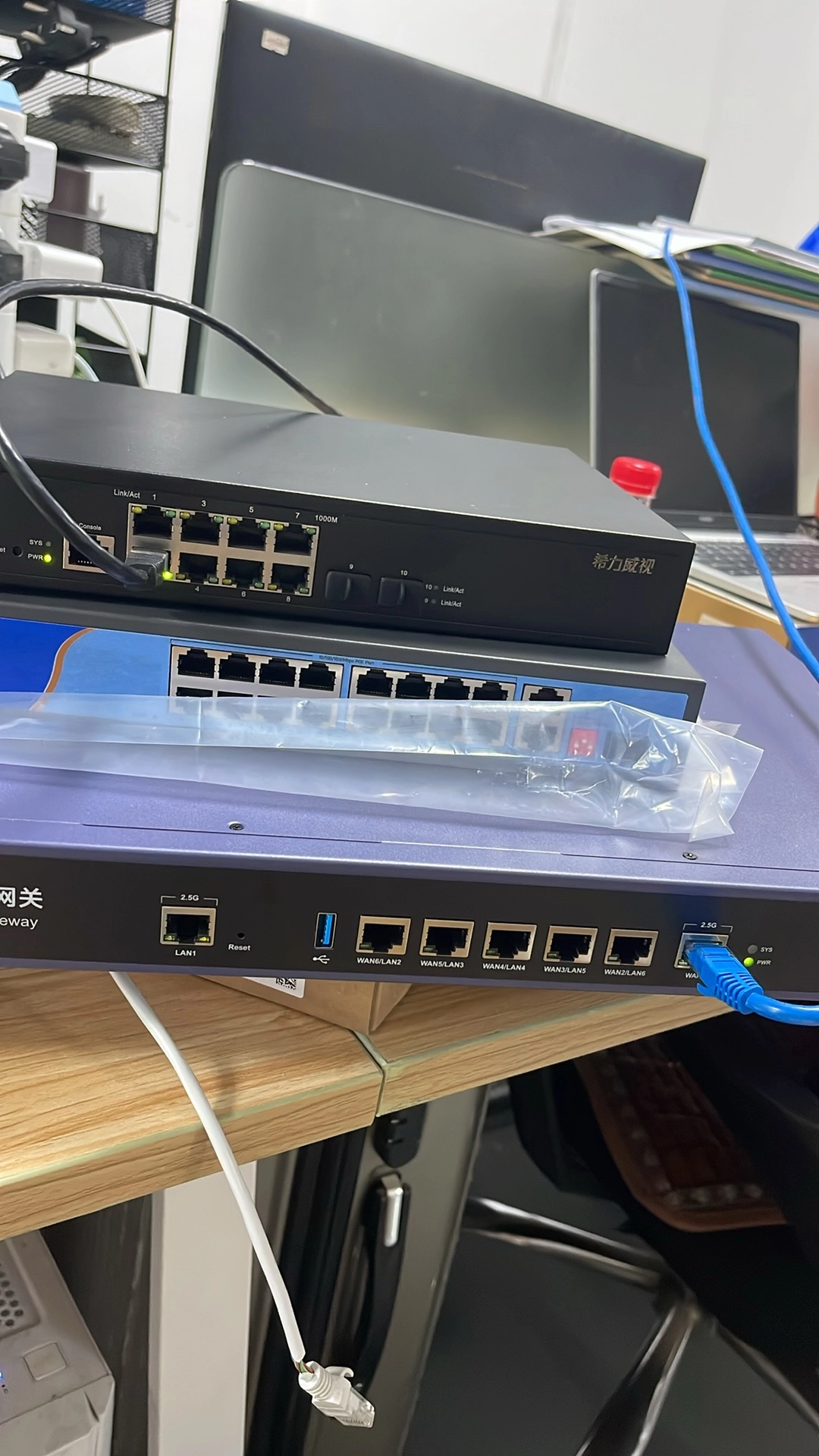
23 APs, 5 PoE switches, 1 gateway — pre-configured in Shenzhen. The client plugs in, powers on, and gets 6 isolated WiFi networks. Here's how we did it.
Read Article →
Practical answers for planning a deployment like this one.
Let our team design a customized poe surveillance networking solution for your project. Get expert guidance and factory-direct pricing.