How to Choose the Right Wireless Bridge for Africa Deployment?
By Mosslink Editorial Team · Updated 2025-11-10
Wireless bridges can carry broadband or CCTV traffic between clinics, schools, farms, towers, and remote buildings where trenching fiber is impractical. Success depends on line of sight, Fresnel clearance, legal channel availability, power stability, and equipment selected for the actual distance.
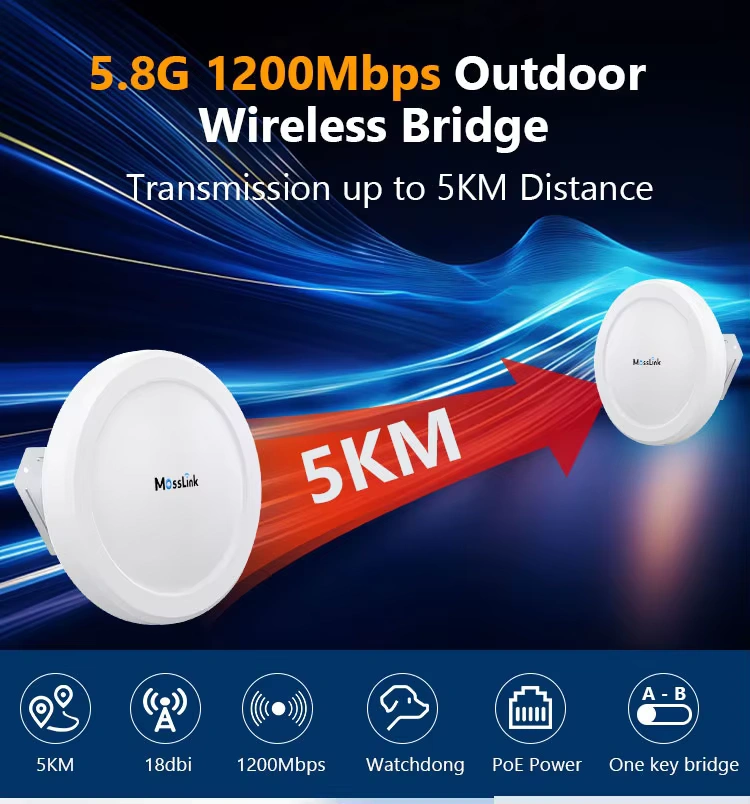
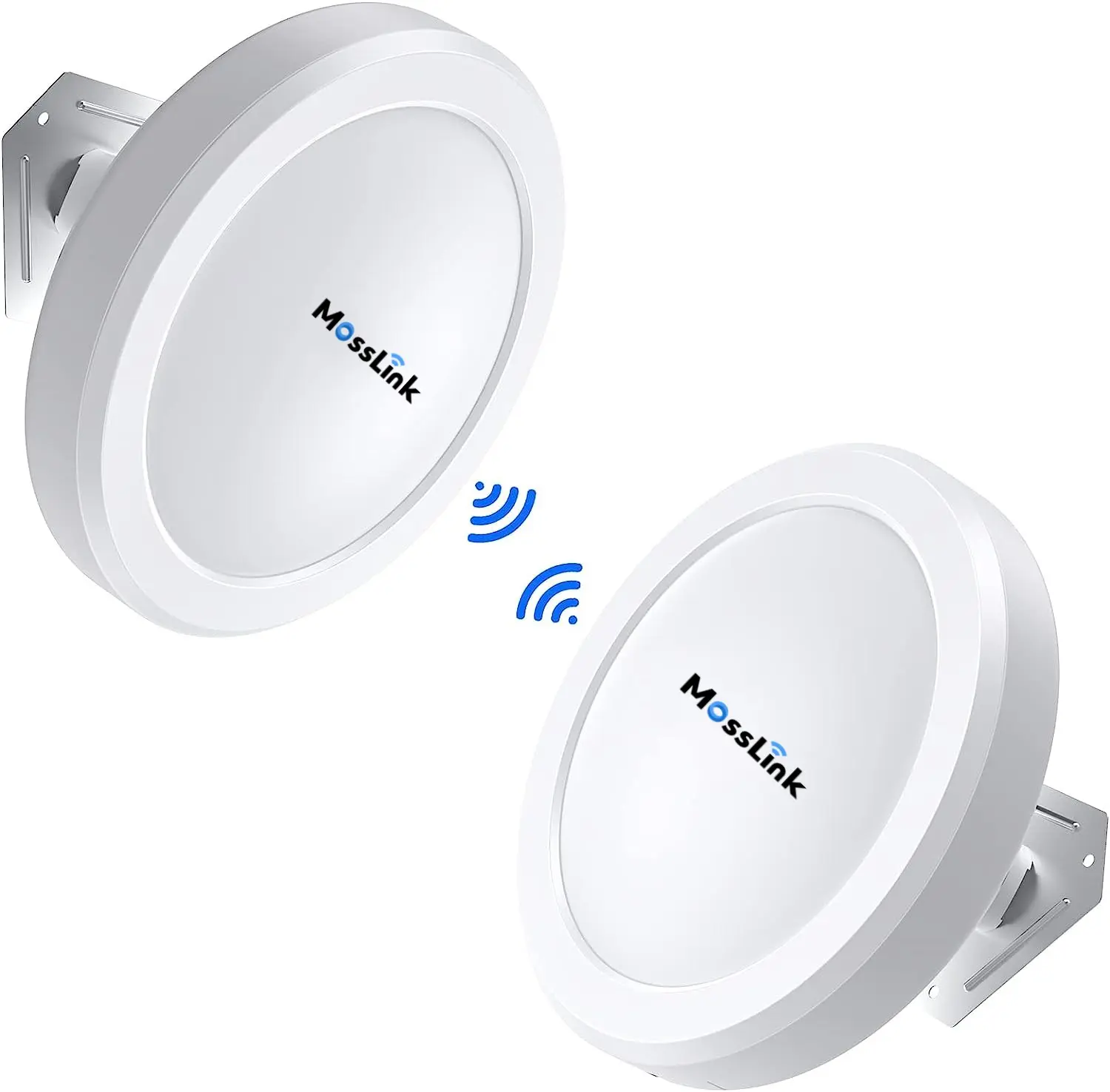
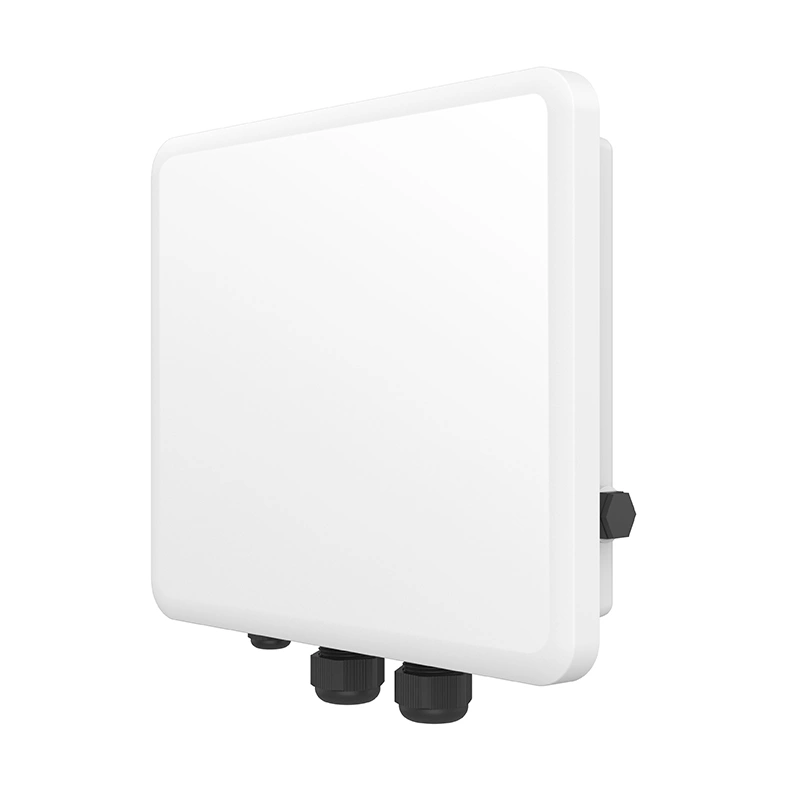
That’s exactly what our Mosslink WB2500 and WB730 wireless bridges help you achieve — and more:
- Reliable long-distance PTP and PTMP wireless transmission
- Rugged, weatherproof enclosures for harsh climates
- Customizable firmware and country-specific frequency control
- Simple plug-and-play setup with OEM/ODM support
How do I determine the right transmission distance?
Transmission distance depends not only on specs but also on line-of-sight, elevation, and surrounding obstructions. Never trust numbers alone — verify them on-site.
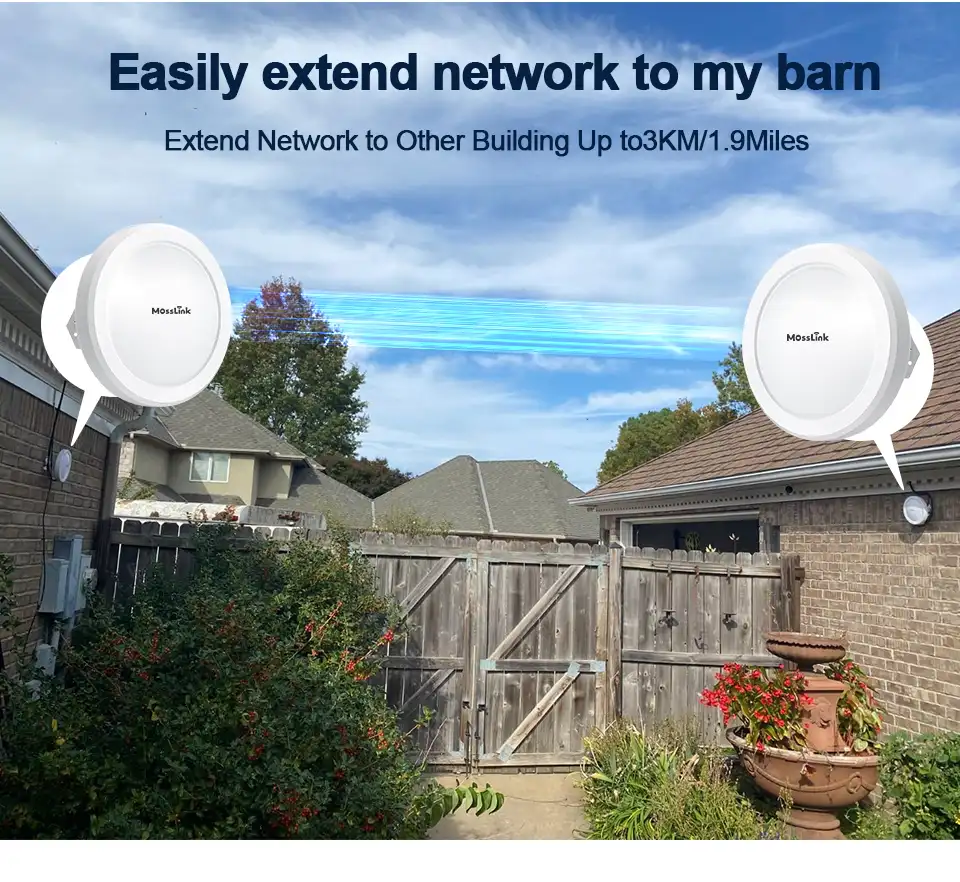
Accurate planning of line-of-sight improves link stability and range
Consider Distance + Terrain
Start by plotting the actual distance and elevation between your endpoints. For 1–5 km, our WB630 is sufficient. For 5–15 km, the WB730 with larger antennas is a better choice. Terrain impacts signal — avoid valleys and trees in the direct path.
Fresnel Zone Clearance
Even if line-of-sight is visually clear, you also need Fresnel zone clearance. This invisible oval-shaped zone allows radio waves to propagate fully. Obstructions like buildings or vegetation can disrupt this and cause signal loss.
Recommended Wireless Bridge Options by Distance
| Distance | Model | Antenna | Bandwidth |
|---|---|---|---|
| 1–3 km | WB630 | 16dBi Panel | 867Mbps |
| 3–7 km | WB730 | 18dBi Panel | 867Mbps |
| 7–15 km | WB5axH6-35 | 35dBi Dish | 1200Mbps |
What frequency band should I use for African rural and urban environments?
Different African countries regulate ISM bands differently. Verify the permitted sub-band, EIRP, DFS/TPC requirements, equipment approval, and import rules with the national regulator or a qualified local integrator before finalizing specifications.
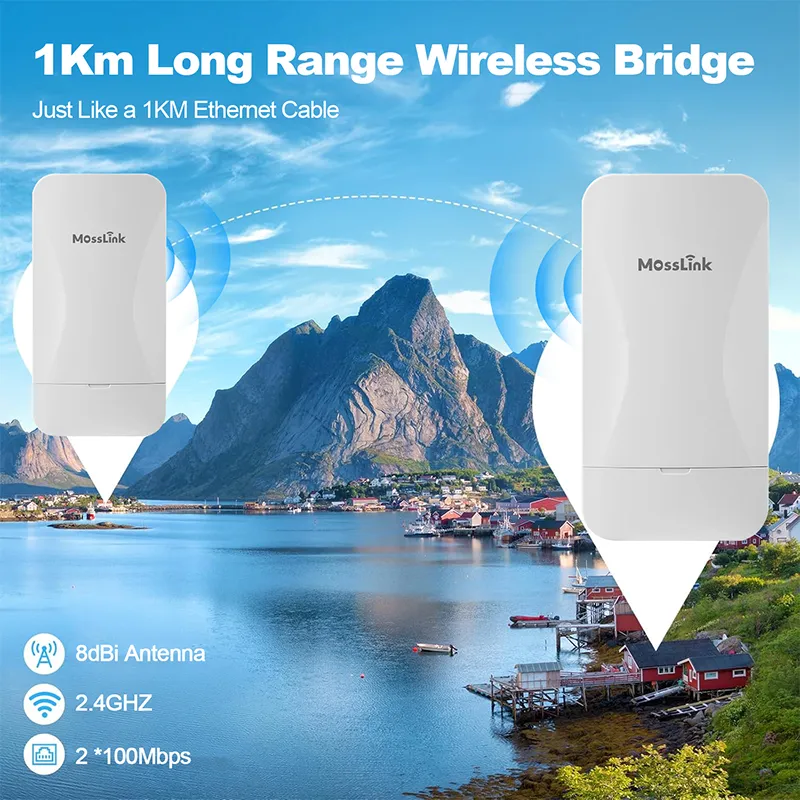
Choosing between 2.4GHz and 5GHz depends on foliage, regulation, and interference
Urban vs Rural Frequency Choices
Urban areas benefit from cleaner 5GHz bands, but these often require DFS and TPC support. Rural deployments may still rely on 2.4GHz bridges due to better foliage penetration. Our 2.4GHz models are used in forested areas and remote villages.
Regional Firmware for Frequency Compliance
For confirmed projects, MossLink can prepare a regional firmware profile that locks the approved country code, channels, channel widths, and transmit-power limits. The final profile must be based on current requirements for the destination country, not copied from a neighbouring market.
Add Outdoor Wi-Fi Coverage at the Remote Site
A bridge connects two networks; it is not a substitute for local client coverage. At the remote end, connect the receiving bridge to an outdoor access point when phones, tablets, handheld terminals, or hotspot subscribers need Wi-Fi around the site.
- AP3000G outdoor Wi-Fi 6 access point — general-purpose IP65 coverage for farms, compounds, schools, and commercial yards.
- APH6-AX3000 industrial outdoor AP — IP67 enclosure, wide operating temperature range, SFP uplink, and centralized management for harsher sites.
For the complete coverage layer, see the outdoor access point solution. If you’re unsure about the bridge model, AP count, or regional firmware, contact us with the country, link distance, terrain, client count, and available power source.
Featured in this guide
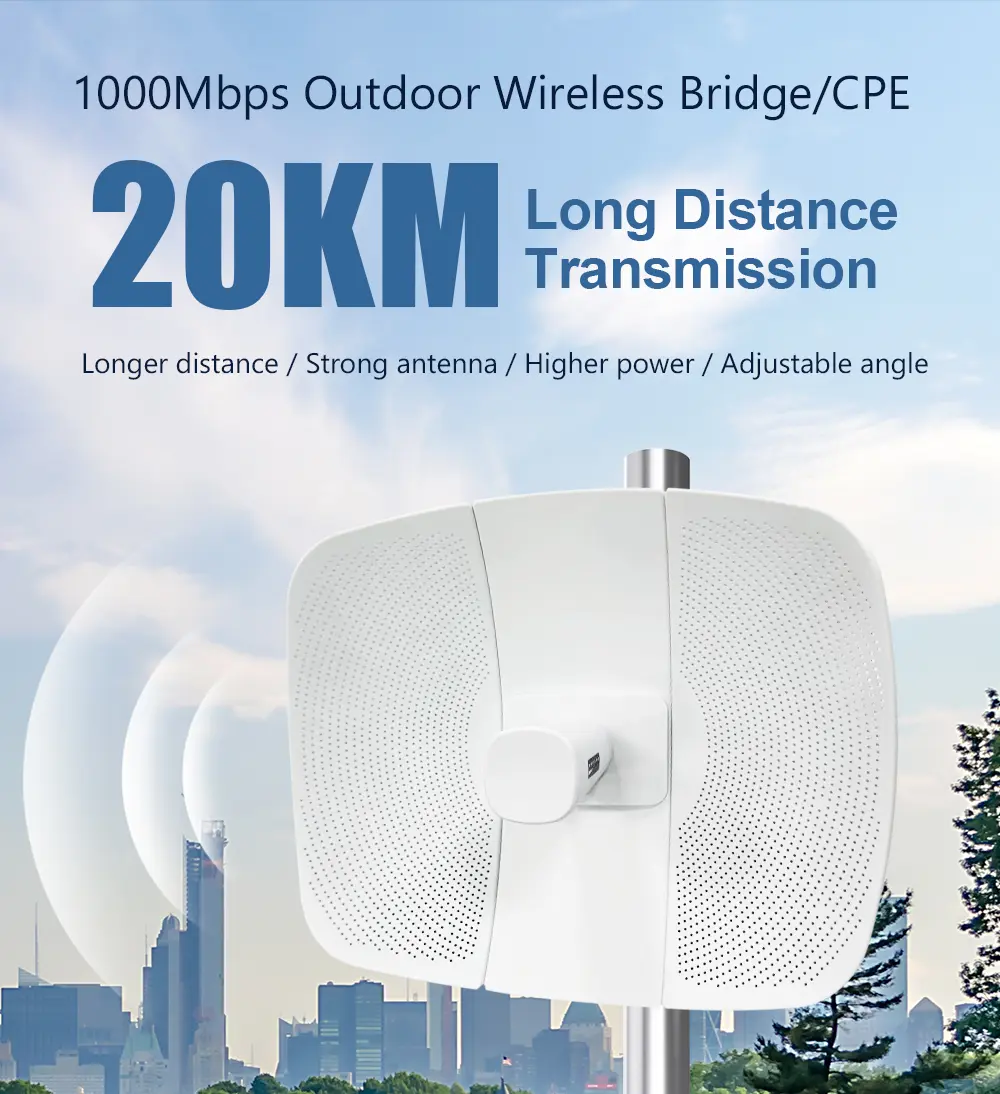
Plan the complete link
Get a point-to-point wireless bridge kit recommendation
Tell us the distance, throughput, power source, and deployment environment. We will match the bridge pair, PoE, outdoor cable, and mounting accessories.
Continue Planning Your Wireless Link
Deploy with confidence
See how MossLink builds Campus Wi-Fi Network Solution & Access Points end-to-end
Network architecture, products used, and real-world results in one place.
Tags
Share